mainmainhome{}
Basil Soapwort
Complete growing guide for Saponaria ocymoides
Introduction
*Saponaria ocymoides* is an exceptional perennial plant for gardens, combining easy cultivation, remarkable hardiness and spectacular flowering. Particularly suited to rock gardens, slopes and stone walls, it proves to be a wise choice for gardeners seeking a decorative plant requiring little maintenance.
Its cold resistance (down to −25 °C), its drought tolerance and its ability to grow in poor soils make it an ideal candidate for gardens subject to the varied climatic conditions of Belgium, France and French-speaking Switzerland.
Whether for floral cascades on a stone wall, a pink carpet in an alpine rock garden or a flowering border in a sun-drenched bed, Basil Soapwort will bring a touch of colour and cheerfulness for several weeks in the heart of spring and summer.
Biology and Classification
Name and Taxonomy
**Scientific name:** *Saponaria ocymoides* L.
**Family:** Caryophyllaceae (pinks, or Caryophyllaceae)
The plant takes its name from the Latin *sapo* (soap), referring to the natural saponins contained in its roots and leaves, which produce a soapy lather in contact with water.
General Description
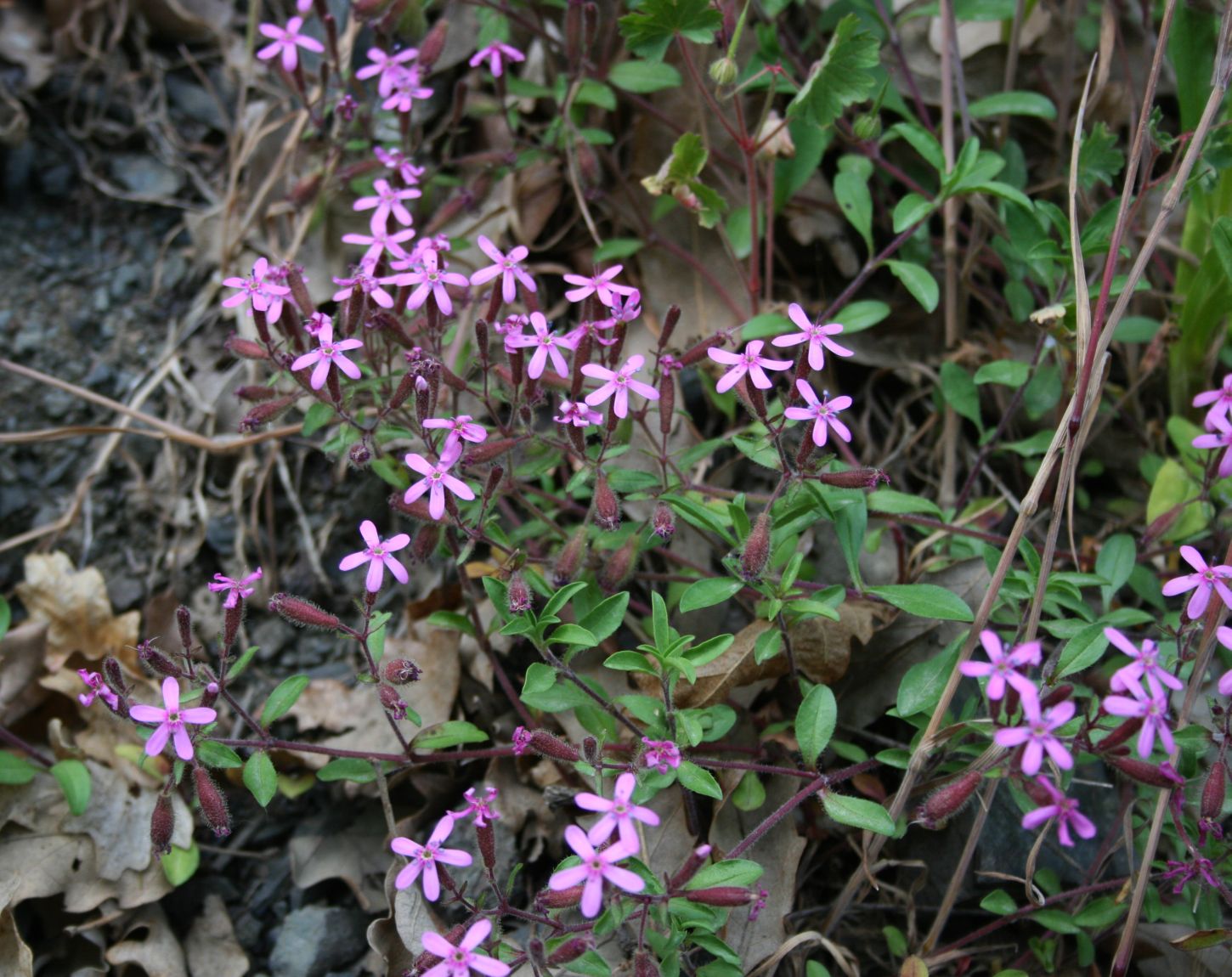
*Saponaria ocymoides* is a herbaceous perennial with a mat-forming and trailing habit. It forms dense and floriferous cushions, ideal for covering the ground quickly. The stems, prostrate to ascending, spread 30 to 50 cm and do not exceed 10 to 20 cm in height. It creates a dense and vigorous plant cover.
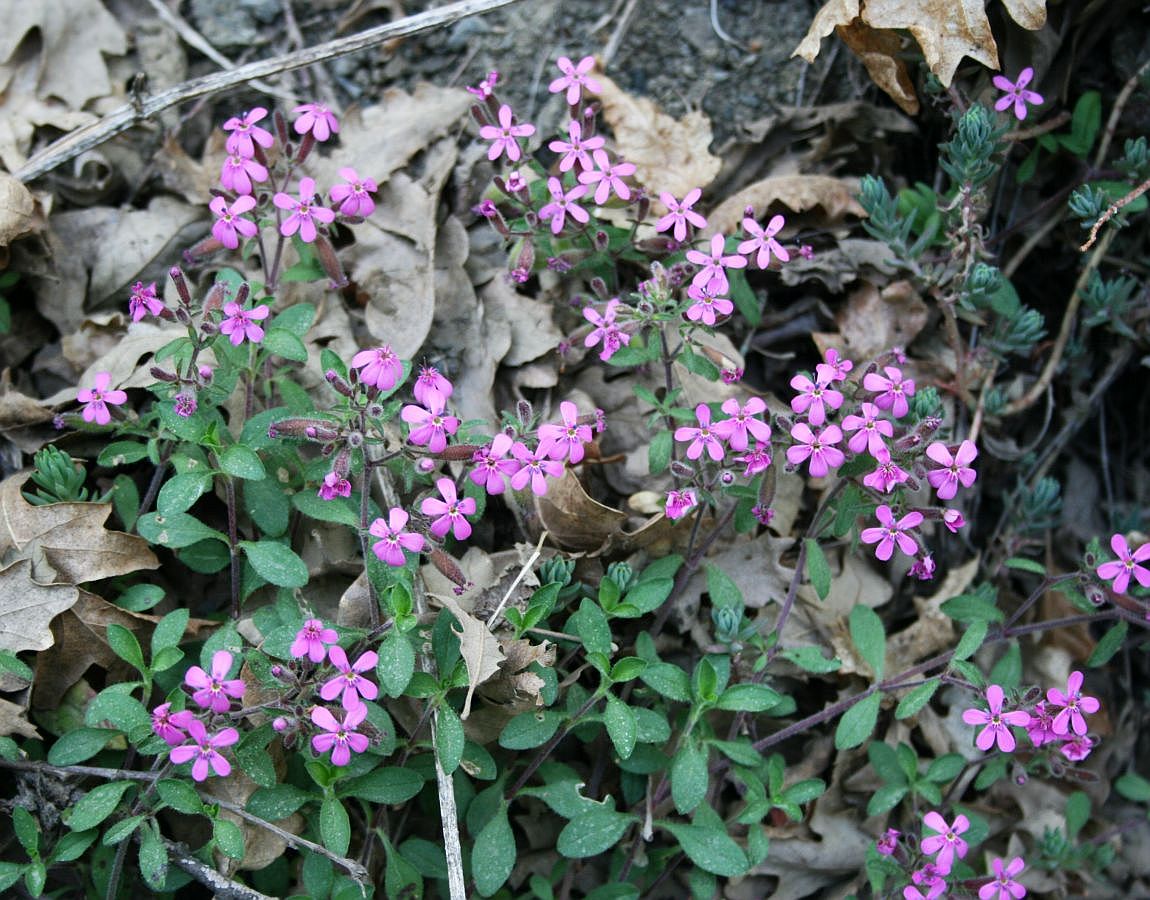
The foliage consists of small oval to lanceolate leaves, opposite, medium green to dark green, measuring about 1 to 3 cm in length. The foliage is semi-evergreen: it remains green in winter in mild regions, but may partially die back during harsh cold.
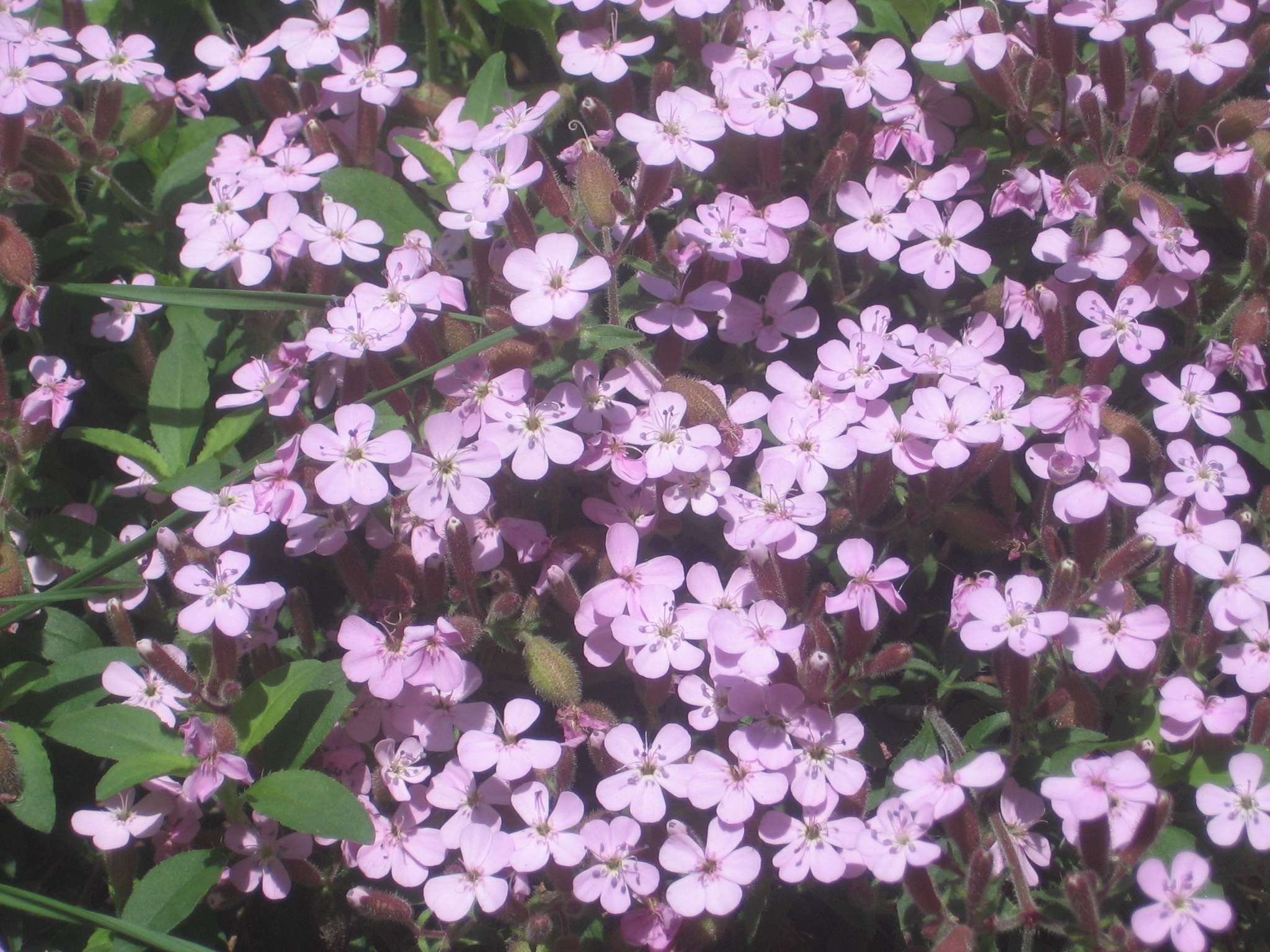
The flowers are small (1 to 2 cm in diameter), star-shaped, grouped in corymbs or terminal clusters. The dominant colour is a more or less intense pink, ranging from pale pink to vivid pink, sometimes slightly purple-tinged. Some varieties display white or red flowers.
The flowering period runs from May to August, with a main peak in May–June. It can be particularly spectacular when the plant is in full bloom, entirely covering the foliage with a fragrant pink veil.
Origin and Natural Habitat
*Saponaria ocymoides* is native to the mountainous regions of southern and central Europe. Its natural range extends mainly across alpine and subalpine mountain ranges: the Alps (France, Switzerland, Italy, Austria, Germany), the Pyrenees (France, Spain), the Massif Central (France), the Apennines (Italy), the Carpathians (Eastern Europe).
In the wild, this plant favours rocky soils, scree, rock faces, dry slopes and rocky mountain pastures, between 500 and 2,500 metres of altitude, on stony, limestone or neutral soils, well drained and relatively dry.
History and Discovery
Botanical discovery
The plant was scientifically described by Carl von Linné in his foundational work *Species Plantarum* in 1753, under the name *Saponaria ocymoides*. The specific epithet *ocymoides* refers to the resemblance of its fragrance to that of basil (*Ocimum basilicum*), although the two plants are botanically very distant.
Since Antiquity, European peoples used the soapy properties of this plant for washing textiles and skin. Mountain shepherds used the leaves and roots to clean their sheep and their laundry, hence the name "soap herb."
Introduction in horticulture
Its ornamental use in rock gardens and gravel gardens dates from the 19th century, when it was introduced into alpine gardens and botanical collections. Its hardiness, ease of cultivation and spectacular flowering have made it a highly appreciated plant among gardeners, particularly for naturalistic or alpine-style gardens.
Growing and Garden Care
Exposure
*Saponaria ocymoides* is a full-sun plant that thrives in warm, bright situations. In southern regions of France, light partial shade during the hottest hours can be beneficial, especially if the soil remains moist. In shade, growth is weak and flowering sparse.
Soil and Substrate
This soapwort tolerates a wide range of soils but detests stagnant moisture. It prefers ordinary, stony, sandy or gravelly soil, with a neutral to slightly alkaline pH (6.5 to 8.0), with good to excellent drainage. Heavy compact clay soils should be avoided, as well as waterlogged or boggy soils, and overly fertile soils.
Planting and Spacing
The optimal planting period is in spring (April–May) or autumn (September–October). Allow a spacing of 30 to 40 cm between each plant, or 6 to 9 plants per square metre for rapid coverage. Plant at the same level as the root ball, neither buried nor raised, in soil loosened to a depth of 15–20 cm. Incorporate gravel or sand if the soil is heavy.
Watering and Fertilising
*Saponaria ocymoides* is renowned for its drought tolerance once established. During the first year, water moderately (1 to 2 times per week in dry periods). Established plants only need watering in case of prolonged drought.
No particular fertilisation is required. Overly rich soils encourage excessive foliage at the expense of flowering. Avoid nitrogen-rich fertilisers.
Seasonal Maintenance
In **spring**, clean away any parts damaged by winter. In **summer**, water sparingly during heatwaves and remove spent flowers to prolong blooming. In **autumn**, let the plant prepare naturally for winter and reduce watering. In **winter**, avoid compacting snow on the plants and remove dead plant debris.
Pruning and Refreshing
A rejuvenating prune can be carried out after the main flowering (around July–August): cut back the stems by half to encourage a discreet second flowering in late summer and maintain a compact habit.
Hardiness
*Saponaria ocymoides* ranks among the hardiest perennial plants available in horticulture. It tolerates temperatures ranging from −40 °C to −12 °C (USDA zone 3 to 8), or down to −25 °C in European conditions. It easily survives European winters, from the Paris Basin to Belgium, French-speaking Switzerland and the cold regions of eastern France.
Propagation
Sowing
Sowing is done in spring (April–May) or autumn (September–October). Sow on the surface on a well-draining substrate (sand + light compost), keep moist but not waterlogged. Germination takes 2 to 4 weeks at 15–20 °C. Flowering occurs 1 to 2 years after sowing.
Clump division
The simplest and fastest method. Dig up a portion of the plant, separate the clumps into fragments of 10 to 15 cm with roots, replant immediately and water generously for the first month. Almost instant propagation.
Stem cuttings
Take non-flowering stem tips of 5 to 10 cm in spring or summer, plant in a well-draining substrate, keep moist. Rooting takes 3 to 4 weeks.
Layering
The trailing stems naturally root at the nodes where they touch the soil. Pin a section of stem to the ground, keep moist, and separate after rooting (2 to 3 months).
Garden Uses
Basil Soapwort is ideal in **rock gardens** where it covers stones with a floral cascade effect, on **stone walls** where it gracefully spills over, and on **slopes and banks** where it stabilises the soil while flowering abundantly. It is also very well suited to **planters and hanging baskets** for an elegant trailing effect, or as a **bed border**.
It combines admirably with alpine plants such as *Aubrieta*, *Gentiana acaulis* or *Saxifrages*, low grasses such as *Festuca glauca*, groundcover plants like *Thymus*, *Sedum* or *Phlox subulata*, and even dwarf or groundcover roses.
Its flowers are visited by bees and butterflies, making this plant a good choice for gardens that support biodiversity.
Non-ornamental properties: the roots and leaves contain saponins with cleansing properties, historically used for washing delicate textiles.
Diseases, Pests and Common Problems
*Saponaria ocymoides* is a remarkably healthy plant and rarely affected by pests, thanks in particular to its saponins which provide natural protection.
Diseases
**Root rot** (Phytophthora, Pythium) is the main risk, caused by excess water and poorly drained soils. Powdery mildew may appear in hot, humid weather with limited air circulation. Wilt (Fusarium, Verticillium) is rare.
Pests
Aphids are rare but can distort young shoots (treatment: black soap). Slugs and snails are occasional. Red spider mites and leafhoppers are rare and generally not serious.
Practical Tips
5 tips for success
1. **Give it sun and drainage:** The key to success lies in a sunny spot with soil that does not retain water.
2. **Let it live its life:** This plant does not appreciate excessive care. Once established, it manages on its own. Avoid frequent watering and fertiliser applications.
3. **Plant it where it can spread:** Allow a minimum of 30 to 40 cm between each plant.
4. **Protect it from winter moisture:** Perfect drainage is crucial. A gravel mulch around the crown protects against rot.
5. **Prune after flowering for a second flush:** A light prune after the main flowering stimulates new growth and can trigger a secondary bloom.
Common mistakes to avoid
Planting in heavy, wet soil leads to root rot. Watering too frequently causes gradual decline. Placing in shade reduces flowering to zero. Soil too rich in fertiliser produces foliage but few flowers. Neglecting to control spread can lead to it overwhelming neighbouring plants.
Commercial Varieties
Main varieties
- **'Alba':** Pure white flowers, 10–15 cm in height
- **'Rubra Compacta':** Dark pinkish-red, very compact dwarf variety (8–12 cm)
- **'Tumbling Ted':** Pale pink, very popular English variety (10–15 cm)
- **'Semperflorens':** Vivid pink, longer and more extended flowering (15–20 cm)
- **'Snowtip':** Pink with white tips, elegant two-tone flowers (12–18 cm)
The typical form (species) remains the most common and the most robust.
Where to buy
*Saponaria ocymoides* is widely available in garden centres (Truffaut, Botanic, Jardiland, Gamm vert), specialist nurseries and online (Promesse de fleurs, Bakker, Willemse). It is sold in 8–9 cm pots (€2.50 to €4.00), in 1 to 2 litre pots (€4.00 to €9.00) or as seeds (€2.00 to €4.00).
Conclusion
*Saponaria ocymoides* is an exceptional lively plant for gardens, combining easy cultivation, remarkable hardiness and spectacular flowering. Particularly suited to rock gardens, slopes and stone walls, it proves to be a wise choice for gardeners seeking a decorative plant requiring little maintenance.
Whether for floral cascades on a stone wall, a pink carpet in an alpine rock garden or a flowering border in a sun-drenched bed, Basil Soapwort will bring a touch of colour and cheerfulness for several weeks in the heart of spring and summer.