Peonies — Paeonia
The Queen of May's Gardens — A Comprehensive Gardener's Guide
Biology and classification
A family in its own right
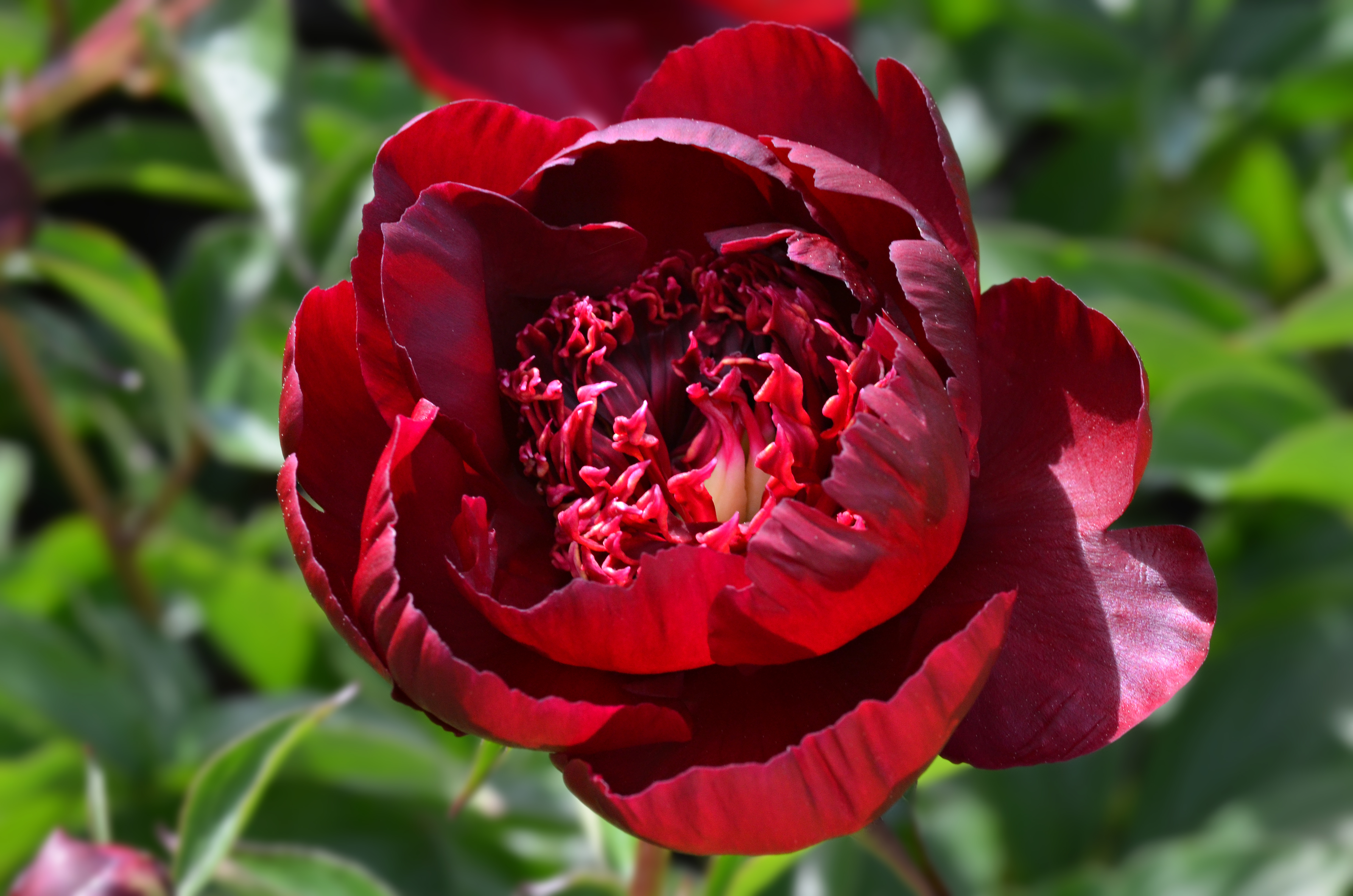
The peony belongs to the genus Paeonia, the only genus of the family Paeoniaceae. For a long time, botanists classified it within the Ranunculaceae family, but modern phylogenetic analyses have confirmed that it constitutes a family of its own, consisting of a single genus.
The genus Paeonia comprises between 25 and 40 species, depending on the classifications, distributed in three main groups:
- Herbaceous peonies — they completely disappear in winter and reappear in spring (e.g., Paeonia lactiflora, Paeonia officinalis)
- Shrubby peonies (subshrubs) — also called tree peonies or Moutan, they retain their woody stems in winter (e.g., Paeonia suffruticosa, Paeonia rockii, Paeonia delavayi)
- Intersectional peonies (Itoh hybrids) — resulting from crosses between herbaceous and shrubby species, they combine the advantages of both groups
Morphological characteristics:
- Roots — tuberous, fleshy, deep, storing significant nutrient reserves
- Stems — erect, robust, bearing 2 to 5 flowers depending on the species
- Leaves — compound, alternate, often divided (pinnately or bipinnately), dark green and glossy, sometimes taking on reddish hues in spring and autumn
- Flowers — solitary, very large (5 to 25 cm in diameter), 5 to 10 persistent sepals, numerous petals (5 to hundreds in double forms), numerous yellow stamens in single forms
- Fruits — star-shaped follicles containing black or red seeds depending on maturity
Chromosome and genetics: Most cultivated herbaceous peonies are diploid (2n = 10) or tetraploid. Itoh hybrids are often sterile or have low fertility.
The number of petals is often a classification criterion: single forms (5-10 petals), semi-double, double, anemone (centre transformed into petal-like structures), bomb (inner petals erect), crowns.
History and Discovery
From Greek medicine to the imperial gardens of China
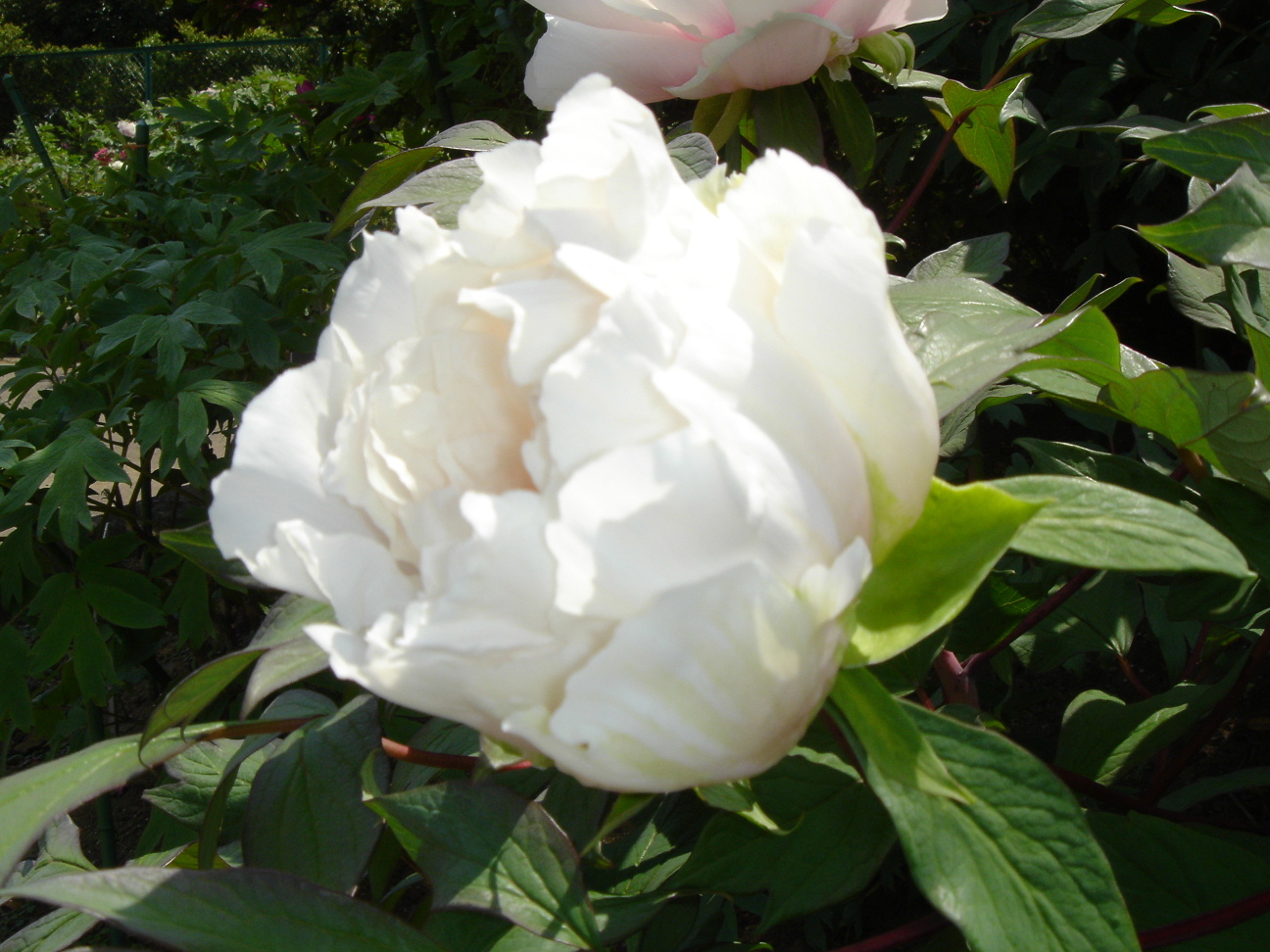
Ancient Greece and Rome
The name Paeonia comes from the Greek Παιών (Paeon), the physician of the gods in Greek mythology. According to the legend reported by Homer in the Iliad, Paeon healed Ares and Hades' wounds with a miraculous plant that took his name. Another version attributes the discovery of the plant to Paeon, a disciple of Asclepius (god of medicine), who found it on Mount Olympus, thus envying his master who tried to kill him—the gods then transformed him into a flower to protect him.
Theophrastus (371-287 BC) describes the peony in his Historia Plantarum as a medicinal plant. Dioscorides, a Greek physician of the 1st century, already distinguishes two forms (male and female) in his De Materia Medica. Pliny the Elder (23-79 AD) attributes up to 20 medicinal properties to it in his Naturalis Historia.
The Chinese Empire: the queen of flowers
In China, the peony has been cultivated for over 2,000 years. The herbaceous peony (Paeonia lactiflora) was already mentioned in the Shijing (Book of Odes), composed between the 11th and 6th centuries BC, as a flower offered as a token of love.
The tree peony (Paeonia suffruticosa), called Mǔdān (牡丹), became the unofficial national flower of imperial China under the Tang dynasty (618-907 AD). Empress Wu Zetian had them planted profusely in the imperial gardens of Luoyang and Chang'an. The city of Luoyang is still today the world capital of the tree peony, with its famous annual festival.
Arrival in Europe
The herbaceous peony Paeonia officinalis is native to Southern and Central Europe—it was therefore known to Europeans since antiquity. In contrast, the Asian peonies, which are much more spectacular, only arrived in Europe from the 18th century:
- 1787 — Paeonia suffruticosa (Moutan) arrives in England thanks to Sir Joseph Banks, director of the Royal Botanic Gardens at Kew, who brought back specimens from China.
- 1808 — first serious hybridizations in France, notably by Parisian nurserymen.
- 1820-1860 — golden age of herbaceous peonies in France, with the breeders Jacques Calot, Victor Lemoine (Nancy) and Félix Crousse (Nancy) who created hundreds of varieties still cultivated today.
- 1948 — the revolutionary cross by Toichi Itoh (Japan) resulted in the first interspecific hybrids, published only in 1967.
Victor Lemoine (1823-1911), a brilliant nurseryman from Nancy, deserves special mention: he created, among others, the varieties 'Duchesse de Nemours' (1856), 'Festiva Maxima' (1851) and 'Marie Lemoine' (1869), still considered among the most beautiful white peonies ever created.
Sources
The main types of peonies
Herbaceous, shrubby and Itoh hybrid
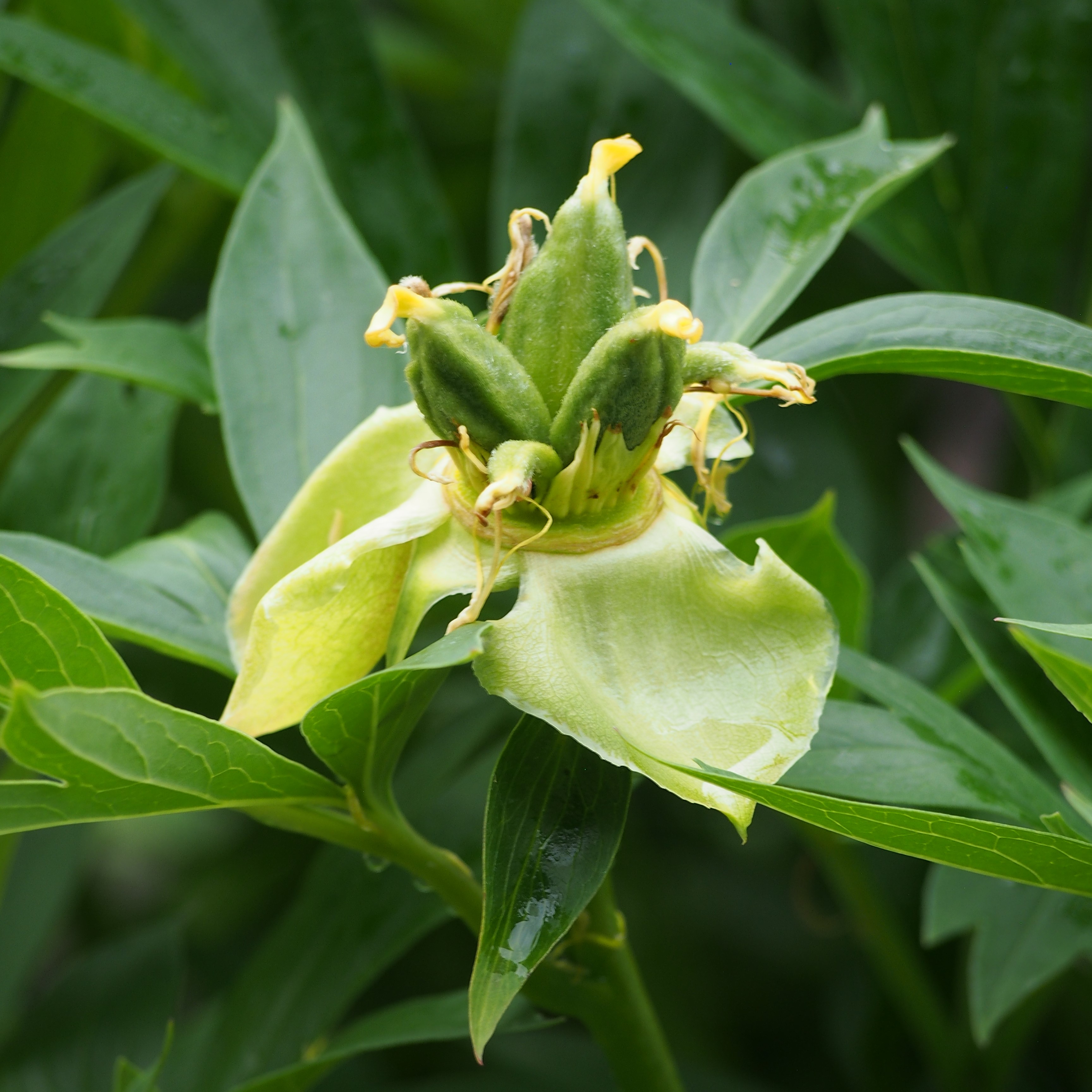
1. Herbaceous peonies (section Paeonia)
These are the most common in our gardens. They completely disappear in winter and regrow each spring from their rhizomes. The main species cultivated are:
- Paeonia lactiflora — Chinese species, the basis of most modern cultivars. Flowering in June-July, fragrant, with a very large number of varieties.
- Paeonia officinalis — European species, flowering earlier (May), less fragrant but very hardy. Subspecies: officinalis, villosa, microcarpa
- Paeonia mlokosewitschii — known as "Molly the Witch", a Caucasian species with simple sulphur-yellow flowers, very rare and sought after.
- Paeonia tenuifolia — very finely cut, almost feathery foliage, bright red simple flowers, a spectacular species.
2. Shrubby peonies (section Moutan)
Sub-shrubs from 1 to 2.5 m tall, with persistent woody stems in winter. Flowering earlier than herbaceous peonies (May in Europe). Less hardy in very cold areas.
- Paeonia suffruticosa — the mother species of Chinese Moutan, the source of traditional Japanese and Chinese cultivars.
- Paeonia rockii — discovered by botanist-explorer Joseph Rock in 1914 in the mountains of Gansu (China). White flowers with a central purple blotch, very fragrant, exceptionally hardy for a shrubby peony.
- Paeonia delavayi — species from Yunnan with red or yellow flowers (var. lutea), more natural and less formal habit.
- Paeonia ostii — very fragrant, the source of highly sought-after "Gansu Mudan" cultivars.
3. Itoh hybrid peonies
Crosses between Paeonia lactiflora and Paeonia delavayi var. lutea mainly. They combine:
- The bushy habit and hardiness of herbaceous peonies (the stems die in winter)
- The size and shape of the flowers of shrubby peonies
- Unusual colours: yellow, orange, coral, bicolour
- Very abundant flowering (30 to 50 flowers per mature plant)
- Increased resistance to fungal diseases
Itoh hybrids are more expensive than others (£15 to £40 per division), but their longevity and resistance make them a worthwhile investment.
Sources
In the Garden — Planting and Exposure
The Basics for Successfully Growing Peonies
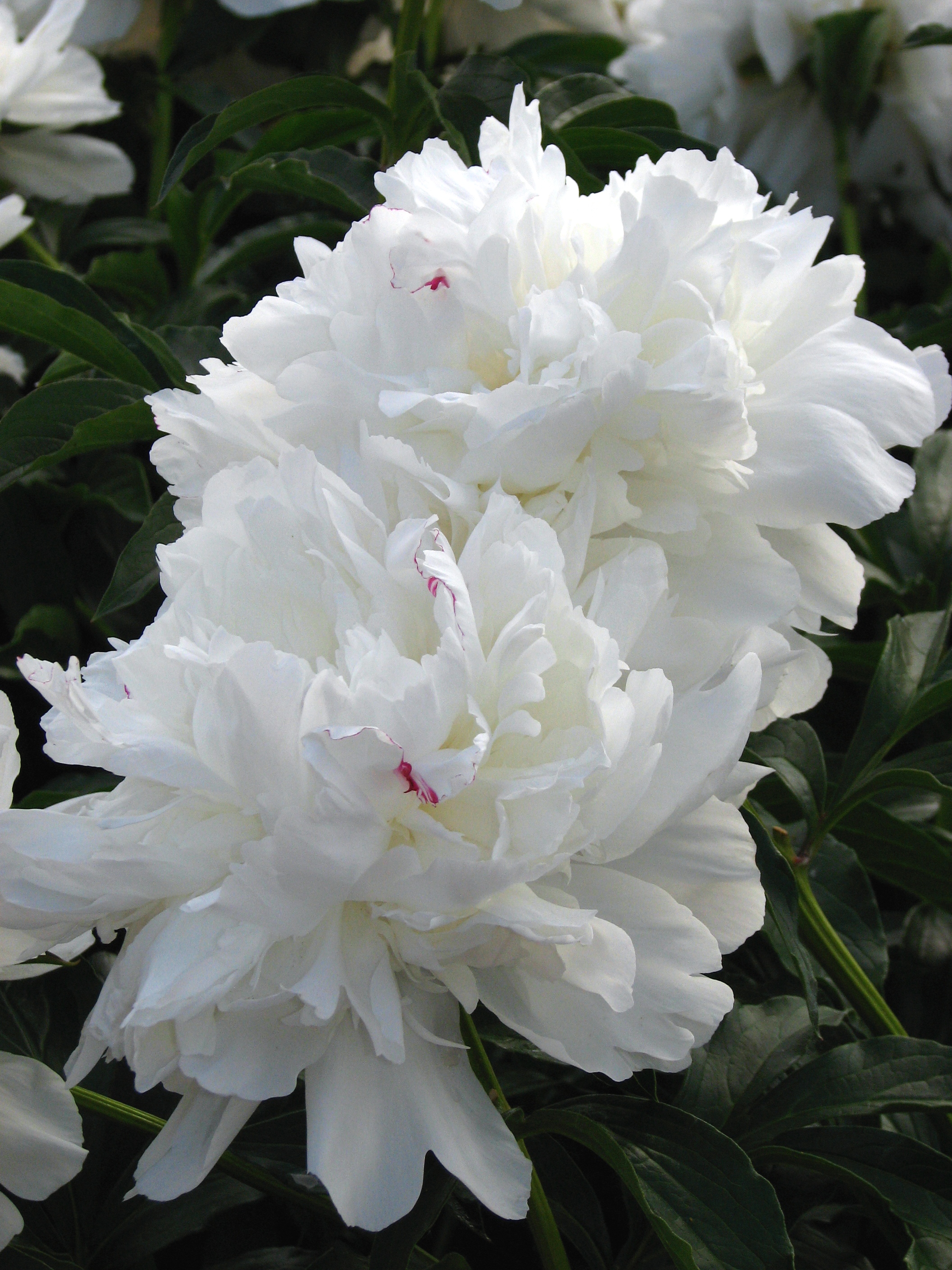
Exposure
Peonies thrive in full sun to light partial shade. A minimum of 4 to 6 hours of direct sunlight per day is necessary for abundant flowering. In areas with very hot summers, partial shade in the afternoon is beneficial for prolonging the flowering period.
Soil
- Soil deep, rich, and well-drained — peonies dislike stagnant water in winter, which can be fatal to their fleshy roots.
- Slightly acidic to neutral pH (6.0 to 7.0) — ideal.
- Clay soil is acceptable if amended with coarse sand and compost.
- Absolutely avoid heavy, compacted, or waterlogged soils.
Planting Herbaceous Peonies
Planting is done from late August to late October (in Europe), never in the spring. This is the most critical aspect of cultivation:
- Dig a hole 50 cm (20 inches) deep and wide.
- Amend with well-rotted compost mixed with the soil.
- Position the rhizome division so that the red buds (eyes) are 2-3 cm (1 inch) below the soil surface (no more!).
- Cover gently and firm the soil.
- Water thoroughly.
The most common mistake: planting too deeply. If the buds are more than 5 cm (2 inches) deep, the peony will not flower or will flower very little. "A peony that is buried too deeply weeps but does not bloom," as the saying goes.
Planting Shrub Peonies
Shrub peonies sold in Europe are often grafted onto herbaceous peony rootstock. Planting is also done in autumn:
- Plant deeper than herbaceous peonies: the graft point should be 10-15 cm (4-6 inches) below the surface.
- This depth encourages the emission of stems from the peony's own root system.
- Never plant near a wall exposed to cold winds from the north or east.
- Protect the base with mulch during the first year.
Spacing
- Herbaceous peonies: 80 cm (31 inches) to 1.20 m (47 inches) between each plant (the clumps grow slowly but permanently).
- Shrub peonies: 1.50 m (59 inches) to 2 m (79 inches) minimum.
- Itoh hybrids: 1 to 1.20 m (39 to 47 inches).
Recommended Companions
Peonies pair beautifully with lady's mantle (Alchemilla mollis) to mask their base, Siberian irises, perennial geraniums, lupins, old roses, and ornamental grasses.
The peony is an exceptional perennial plant: a well-established plant can live and bloom for more than 50 years without being moved. Do not disturb it unnecessarily!
Sources
Care throughout the seasons
What to do and what not to do
Spring
- Remove winter mulch as soon as the red buds emerge.
- Do not fertilise with nitrogen — this encourages foliage growth at the expense of flowers; instead, use a fertiliser rich in potassium and phosphorus (such as a rose or tomato fertiliser).
- Stake the stems of large double varieties before they fully develop (the heavy flowers are easily blown off).
- Monitor for the appearance of botrytis (see diseases section).
Flowering (May-June-July depending on species and varieties)
- Remove spent flowers (deadheading) to prevent seed formation, unless you want to collect seeds.
- For stems with multiple buds, you can disbud the lateral buds to concentrate energy on the terminal bud and produce a larger flower.
- Cut flowers early in the morning, in bud and with colour, and place them in a vase of cold water — they will last for 5 to 7 days.
Summer — after flowering
- Leave the foliage in place until autumn — it nourishes the rhizomes for the following year's flowering.
- Water during prolonged periods of drought, especially young plants.
Autumn
- Cut back herbaceous stems to the ground after the first frosts (not before, so that nutrients can descend into the rhizomes).
- DO NOT compost peony leaves if botrytis is present — burn them instead.
- Mulch lightly around the base (5 cm of compost or fallen leaves), especially in the first 2-3 years.
- For herbaceous varieties: do not prune woody stems, just remove dead wood.
Winter
Herbaceous peonies are very hardy (down to -30°C for the hardiest varieties). Shrubby peonies generally tolerate -15°C to -20°C, but their early flowering buds can be damaged by late frosts.
Herbaceous peonies do not need to be protected in winter in the Belgian or northern French climate. Shrubby peonies may benefit from a fleece covering over the buds in the event of late spring frosts.
Lack of flowering: causes and solutions
This is the most frequently asked question by gardeners!
- Planting too deep — solution: dig up and replant at the correct depth in autumn.
- Plant too young — a peony may take 2 to 3 years after planting to flower fully.
- Excessive shade — move in autumn to a sunnier location.
- Division too small — wait for the plant to strengthen.
- Pruning of shrubby varieties too severe — never cut into old wood without a reason.
- Soil too poor or too rich in nitrogen — amend and rebalance fertilisation.
Sources
Common Diseases and Problems
Identify, prevent, and treat
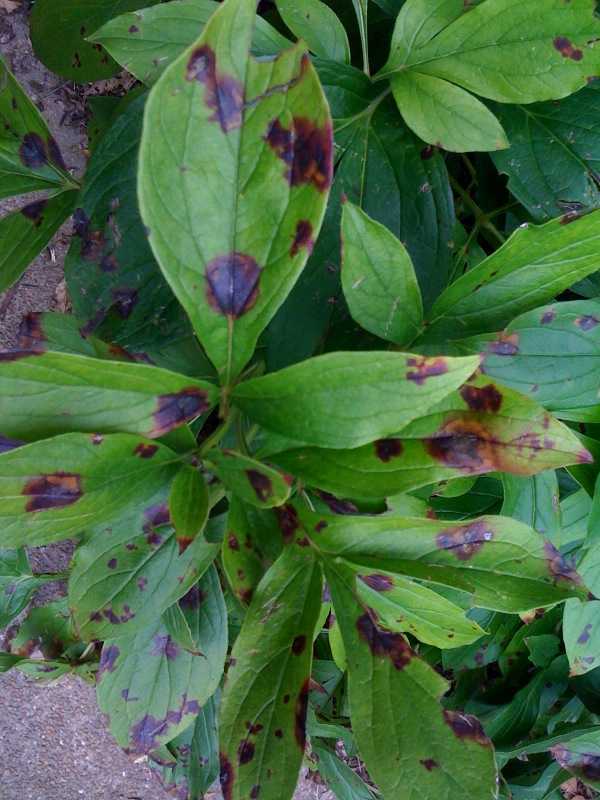
1. Botrytis — Botrytis paeoniae / Botrytis cinerea
This is by far the most common and dreaded disease of peonies. This fungus (grey mold) causes:
- Sudden wilting and browning of young shoots in spring
- Blackening at the base of stems
- Rotting of flower buds that turn brown without opening
- In humid weather, the presence of a characteristic grey fuzz (spores)
Contributing factors: cold and humid weather in spring, poor air circulation, mulch too thick against the stems, plant debris not removed.
Treatment and prevention:
- Cut and burn affected parts immediately (never compost)
- Treat with a fungicide based on sulfur or copper as a preventative measure from the time of emergence
- Improve air circulation (sufficient spacing between plants)
- Avoid watering in the evening or wetting the foliage
- Remove all debris in autumn
2. Peony rust — Cronartium flaccidum
A fungus that causes orange or brown pustules under the leaves, with yellow spots on the top. Less common than botrytis but very contagious. This fungus has a complex biological cycle with an intermediate host (often Scots pine).
Treatment: fungicides based on sulfur, removal of affected leaves.
3. Leaf spots — Cladosporium paeoniae
Brown-red spots with purplish reflections on the leaves, especially at the end of the season. Unsightly but rarely fatal to the plant.
4. Verticillium wilt — Verticillium dahliae
Sudden wilting of entire stems during the growing season. Vascular disease with no effective curative treatment. Remove and destroy affected plants, replace the soil.
5. Ants
Peonies attract ants, which are fond of the sugary nectar secreted by the flower buds. Ants do not harm the plant - they are simply harvesting the extrafloral nectar. It is not necessary to treat. The popular belief that ants help with the opening of flowers is not scientifically confirmed - peonies open very well without them.
Do not confuse ants (harmless) with green aphids that can colonize buds in large numbers and weaken the stems. Aphids are treated with soapy water or rotenone.
6. Nematodes
Paeonia lactiflora can be susceptible to gall nematodes (Meloidogyne spp.) in sandy soils. Symptoms: galls on the roots, stunted growth. Uncommon in temperate climates.
7. Viruses
Several viruses can affect peonies (Peony Ring Spot Virus, Tobacco Rattle Virus), causing leaf deformation, mosaic patterns, or streaks on the petals. Transmitted by insects or poorly disinfected tools. No curative treatment - remove suspected plants.
Sources
Propagation — seeds, divisions, and cuttings
All the methods for propagating your peonies
1. Rhizome division (herbaceous) — the main method
This is the reference method for propagating herbaceous peonies identically. It is carried out in September-October.
- Dig up the clump carefully with a digging fork
- Let the rhizomes dry for 1-2 hours in the shade to facilitate cutting
- Divide with a sharp, disinfected knife
- Each division must have a minimum of 3 to 5 buds (red buds) and a portion of fleshy root
- Dust the cuts with charcoal powder or sulfur
- Replant immediately at the correct depth (buds 2-3 cm below the surface)
A division with fewer than 3 buds will take much longer to flower. Don't be too greedy when dividing.
2. Grafting (herbaceous) — a professional method
Herbaceous peonies are mainly propagated by cleft grafting onto a herbaceous peony rootstock (Paeonia lactiflora), carried out in August-September. This is a delicate technique, reserved for professionals and advanced amateurs. The rootstock is then planted deeply to encourage proper rooting of the scion.
3. Cuttings (herbaceous)
Possible but difficult. Semi-hardwood cuttings in July-August, under mist or cloche, with rooting hormone. Average success rate (20-40%). Some species, such as Paeonia delavayi, are more suitable for this than horticultural cultivars.
4. Layering (herbaceous)
Ground layering in June-July on a flexible stem that is laid down and slightly notched before being buried. Results in 1-2 years. Not commonly used commercially.
5. Sowing — for botanical species
Peonies can be sown, but germination is very slow (stratification is essential), and the seedlings take 5 to 7 years to flower. This method is reserved for botanical species (hybrid cultivars do not reproduce faithfully by seed).
- Collect the black (mature) seeds in August-September
- Hot stratification for 3 months (20°C) followed by cold stratification for 3 months (4°C)
- Sow in March in a pot, under a cold greenhouse
- Transplant after the second year
- Patience: first flowering between 5 and 7 years
Peony seeds have a double dormancy: two-phase stratification is essential to trigger germination. This particularity is well documented in specialized horticultural literature.
Sources
Multiple Uses
Medicinal, culinary, perfumery, and symbolic
Traditional medicinal use
The peony has been a major medicinal plant for centuries in European and Asian traditions:
- Europe — the root of *Paeonia officinalis* was used for epilepsy, infantile convulsions, gout, and as a sedative. Seeds were used as anti-epileptic necklaces for children in the Middle Ages.
- Traditional Chinese Medicine (TCM) — the roots of *Paeonia lactiflora* (called Bai Shao — white root) and *Paeonia veitchii* (Chi Shao — red root) are fundamental plants in TCM, used for gynecological disorders, pain, spasms, and liver conditions.
- Modern research — studies identify active molecules (paeoniflorin, paeonol) in peony roots with anti-inflammatory, antispasmodic, and neuroprotective properties, which are still under investigation.
The roots and seeds of peony contain potentially toxic compounds (paeonol, essential oil). The peony should not be consumed or used for self-medication without qualified medical advice.
Use in perfumery
The peony is a staple of modern perfumery. Major brands (Guerlain, Dior, Lancôme, Hermès) use the peony note as a fresh and powdery floral accord. Paradoxically, there is no commercially available peony essential oil — the flowers do not yield enough through distillation. Perfumers therefore create the "peony note" through chemical synthesis or from extracts of other flowers (rose, geranium, lilac) that reproduce the olfactory profile of the peony.
Culinary use
In Chinese tradition, the petals of *Paeonia suffruticosa* and *Paeonia lactiflora* are consumed:
- Petals fried in sweet doughnuts
- Dried petal infusion
- Candied petals
Decorative use — cut flower
The peony is one of the most widely consumed cut flowers in the world, competing with the rose in floricultural markets. The main global producers of cut peonies are the Netherlands (grown in greenhouses), Chile, Alaska, and New Zealand (offset seasons for export).
Symbolism
- China — happiness, prosperity, nobility, spring (unofficial national flower since 2019)
- Japan — courage, nobility, bravery (flower associated with bushido)
- West — romance, luxury, marriage (widely used in bridal bouquets)
- State of Indiana (United States) — official state flower since 1957
Sources
Essential Varieties
A selection of remarkable and proven cultivars
Herbaceous Peonies — The Classics
'Festiva Maxima' — Miellez, 1851
Very large, double flowers, pure white with a few crimson streaks in the centre. Highly fragrant. Exceptional vigour. One of the best-selling peonies in the world for 170 years.
'Duchesse de Nemours' — Calot, 1856
Double flowers, creamy white turning to pure white, slightly tinted with yellow in the centre. Intense fragrance. Elegant habit. An essential classic for French gardens.
'Sarah Bernhardt' — Lemoine, 1906
Large, fragrant, double pink flowers, slightly salmon-coloured. Named in honour of the famous French actress. Extremely popular worldwide.
'Karl Rosenfield' — Rosenfield, 1908
Intense, dark red double flowers, lightly fragrant. Strong stems. One of the best red varieties available.
'Monsieur Jules Elie' — Crousse, 1888
Very double, lilac-pink flowers in a ball shape, with an enchanting fragrance. Considered the perfect pink peony by many collectors.
'Bowl of Beauty' — Hoogendoorn, 1949
Anemone-shaped: outer petals pink and a cream-white, petaloid centre. Very graphic and modern in appearance. Excellent performance.
Herbaceous Peonies — Remarkable New Introductions
'Coral Charm' — Wissing, 1964, AGM RHS
Semi-double flowers, bright coral that gradually lightens to salmon and then cream. Unique colour and highly prized by florists. Awarded by the American Peony Society.
'Jan van Leeuwen' — Van Leeuwen
Pure white, single flowers with golden-yellow stamens. Very natural appearance, ideal for contemporary or naturalistic gardens.
Shrubby Peonies
Paeonia rockii 'Rock's Variety'
Semi-double white flowers with a spectacular purple-black blotch at the base of the petals. Intense fragrance. Flowering in mid-May. Very hardy for a shrubby peony. Considered one of the most beautiful peonies in the world.
'Renkaku' (Flock of Egrets) — Japanese cultivar
Very elaborate, fringed white double flowers. Classic Japanese cultivar of Paeonia suffruticosa.
Itoh Hybrids — The Revolutionaries
'Bartzella' — Anderson, 1986
Sulphur-to-gold semi-double flowers, lightly fragrant, very abundant (30 to 50 flowers per plant). The absolute reference for yellow Itoh hybrids. Highly sought after in the market.
'Cora Louise' — Anderson, 1986
Pure white semi-double flowers with a lavender-pink blotch in the centre. Generous flowering.
'Sequestered Sunshine' — Tolomeo, 2000
Lemon-yellow double flowers. One of the most double and long-lasting Itoh hybrids.
Quality labels to look for: AGM (Award of Garden Merit) from the RHS (United Kingdom), Gold Medal from the American Peony Society. These awards guarantee proven ornamental value.
Sources
Where to Buy Peonies — Commercial Aspect
Specialised Nurseries and Reliable Sources
In Belgium and France
- Pépinière Filippi (Mèze, France) — specialist in Mediterranean perennials, selection of hardy peonies: jardin-sec.com
- Pivoinerie de l'Allier (Varennes-sur-Allier, France) — collection of over 200 varieties, online and on-site sales: pivoinerie-allier.com
- Pivoinerie Rivière (Paray-le-Monial, France) — historic breeder and producer, a French reference: pivoines.fr
- De Baat Pioenrozen (Netherlands) — a leading Dutch company, wide range, shipping throughout Europe: pioenrozen.nl
- Pépistore / Planfor — aggregator of European nurseries, many varieties available online
Specialists in Tree Peonies and Itoh Hybrids
- Pivoines Rivière (France) — one of the best selections of tree peonies and Itoh hybrids in France
- Klehm's Song Sparrow (United States) — a world leader for Itoh hybrid peonies, international shipping: songsparrow.com
- Cricket Hill Garden (Connecticut, United States) — a world specialist in Chinese tree peonies and Itoh hybrids: treepeony.com
Buying Advice
- Prioritise fresh rhizomes in autumn (August to October) rather than dried divisions in plastic bags in spring (higher failure rate)
- Check that herbaceous rhizomes have at least 3 well-formed eyes
- For tree peonies, prefer plants in pots of at least 2-3 years old
- Itoh hybrids are more expensive (€15-40), but worth the investment for their resilience and flowering
- Be wary of bargain offers on generalist websites — the quality of the rhizomes is often poor
Indicative Prices (2024-2025)
- Herbaceous peony cultivar, classic: €5 to €15 per division
- Herbaceous peony cultivar, rare: €15 to €30
- Tree peony in a 2-3 year old pot: €20 to €60
- Itoh hybrid: €15 to €45
- Rare botanical species (P. rockii, P. mlokosewitschii): €20 to €80
The French Peony Society (SFP) and the American Peony Society maintain directories of approved producers and reference variety databases.
Sources
Peony: Summary - Technical Data
The essentials at a glance
Herbaceous
- Family: Paeoniaceae
- Exposure: Sun to partial shade
- Soil: Rich, well-drained, pH 6-7
- Planting: September-October
- Planting depth (eyes): 2-3 cm
- Flowering: May to July
- Hardiness: Up to -30°C
- Lifespan: 50 years and more
- Mature size: 60-100 cm
Shrubby
- Family: Paeoniaceae
- Exposure: Sun (sheltered from cold winds)
- Soil: Rich, well-drained, pH 6-7
- Planting: September-October
- Planting depth (graft): 10-15 cm
- Flowering: April-May (early)
- Hardiness: -15°C to -20°C
- Lifespan: Several decades
- Mature size: 1.20 to 2.50 m
Summary of mistakes to avoid
- Do not plant too deeply herbaceous varieties (eyes more than 5 cm deep → no flowers)
- Do not divide too often - a peony that is not disturbed flowers better
- Do not prune the stems of shrubby varieties in winter (they bear the flower buds for the following year)
- Do not cultivate at the foot of peonies (shallow roots are easily damaged)
- Do not compost diseased leaves (botrytis - burn them)
- Do not treat for ants (they are harmless)