Petunias and Surfinias: The Ultimate Guide
From biology to professional cultivation – Everything you need to know about these garden stars
Introduction: The undisputed stars of balconies and gardens
Two complementary plants with unique characteristics
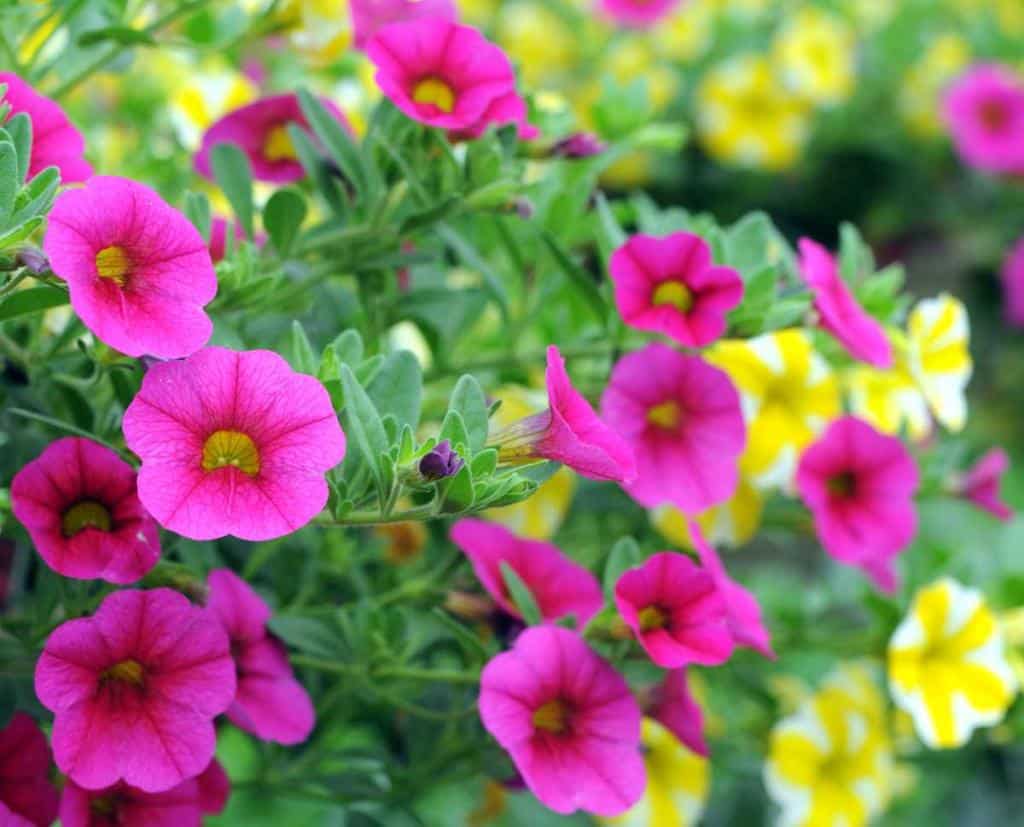
Petunias and surfinias are among the most popular flowering plants in the world, appreciated for their abundant blooms, long flowering season, and ease of cultivation. Although often confused, they have distinct characteristics that make them suitable for different uses in landscaping and horticultural production.
This comprehensive guide covers all aspects: biology, history, cultivation (amateur and professional), diseases, commercial and multifunctional aspects. The information is sourced from recognised scientific and horticultural references.
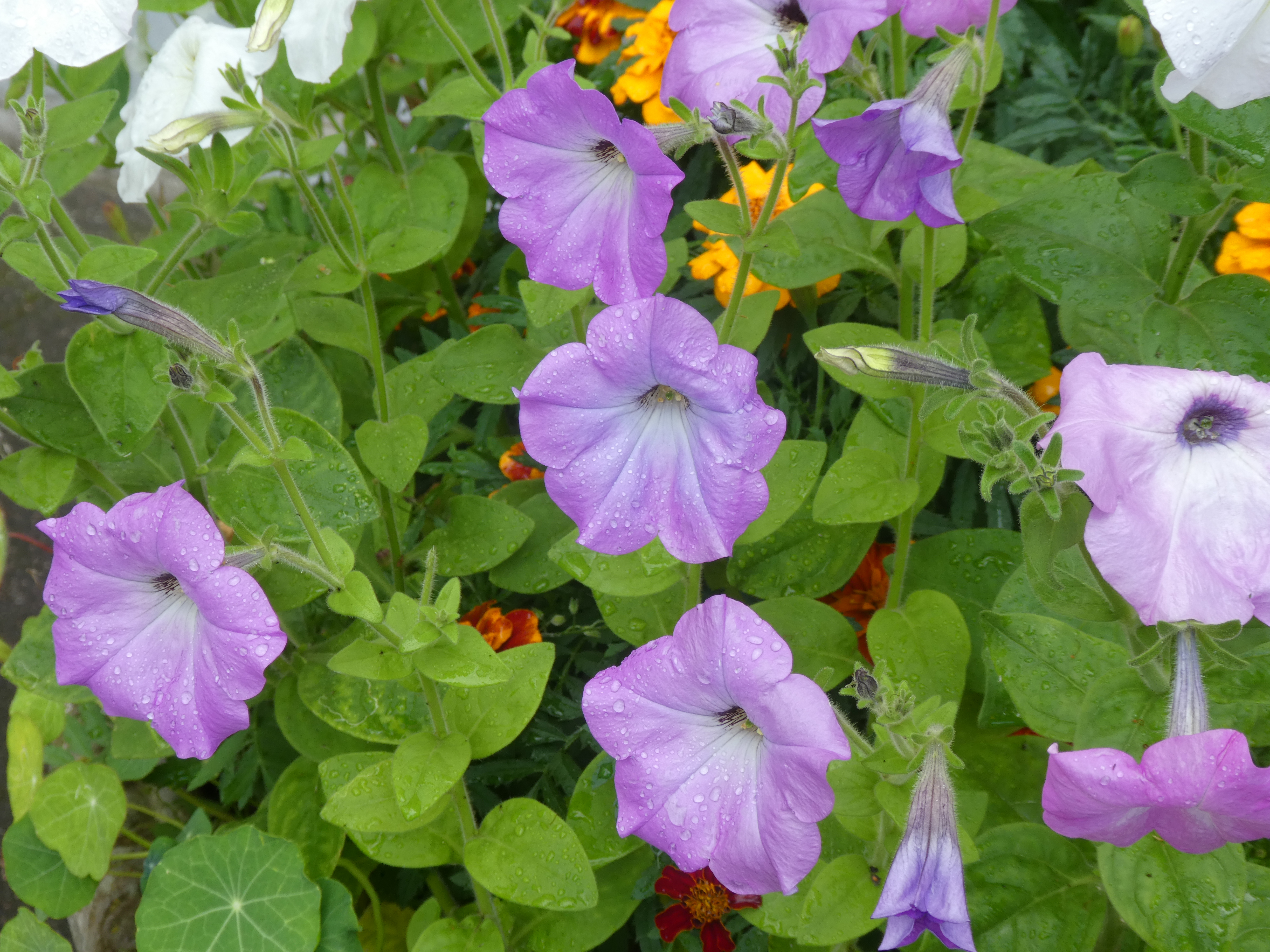
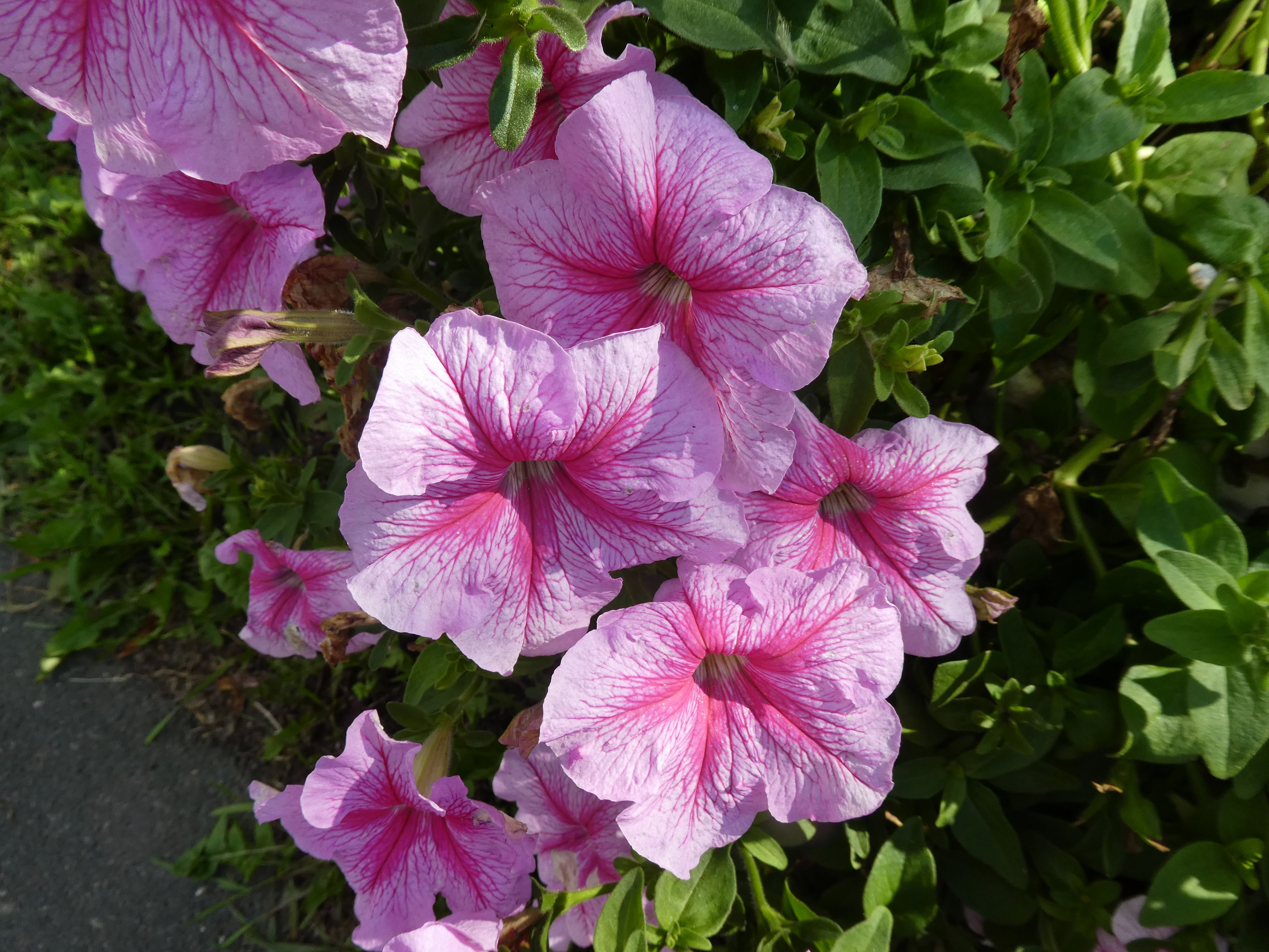
title{🌿 Part 1: Petunias (Petunia spp.)}
subtitle{Biology, history, and cultivation of an iconic plant}
_Flower.JPG — (cc by-sa 3.0))
block{
title{🔬 Biology and characteristics}
subtitle{Classification, morphology, and physiological characteristics}
Petunias belong to the <Solanaceae> (nightshade) family, which also includes tomatoes, potatoes, and tobacco. The genus <Petunia> includes approximately 20 to 40 species, depending on the classification.
list{
Family: Solanaceae
Genus: Petunia
Main species: Petunia axillaris (white), Petunia integrifolia (purple), Petunia violacea
Type: Annual or perennial plant, depending on the climate (usually grown as an annual in temperate climates)
Habit: Erect to spreading, height 20-60 cm depending on the variety
Leaves: Simple, oval, slightly pubescent
Flowers: Funnel-shaped, 5 fused petals, diameter 3-10 cm, various colours (white, pink, red, purple, blue, yellow, bicolour)
Fruit: Capsule containing many small seeds
Characteristic: Continuous flowering from May to frost under favourable conditions
}
Petunias are <hermaphroditic> (cross-pollinating) plants, which explains the great diversity of modern hybrids. Selection has produced larger flowers, greater resistance, and more vibrant colours.
title{🌍 History and discovery}
subtitle{From South America to gardens around the world}
Petunias are native to South America, mainly Brazil, Argentina, and Uruguay. Wild species were discovered by European explorers in the 18th century.
1760: First scientific description by the French naturalist Charles Plumier, who named the genus "Petunia" (from the Brazilian word "petun" meaning "tobacco," referring to the similar smell of the leaves).
1820-1830: Introduction of the first species (Petunia violacea and Petunia axillaris) to Europe.
1850-1900: Start of hybridization by European and American horticulturists, giving rise to the first modern petunias.
1930s-1950s: Development of large-flowered (Grandiflora) and multi-flowered (Multiflora) petunias.
1990s: Introduction of cascading petunias (Wave series) and development of disease-resistant varieties.
title{Historical sources}
list{
Britannica — Petunia
PlantZAfrica — History of petunias
}
}
block{
title{🌱 Cultivation and care}
subtitle{Complete guide for amateur gardeners and professional growers}
subtitle{📌 Optimal growing conditions}
list{
Exposure: Full sun (minimum 6 hours/day). Petunias tolerate partial shade, but flowering is reduced.
Soil: Well-drained, fertile soil, slightly acidic to neutral (pH 6-7). Avoid heavy clay soils.
Watering: Regular but not excessive. Petunias are susceptible to root rot. Water at the base of the plant, never on the leaves.
Temperature: Ideally between 15°C and 25°C. Sensitive to frost (minimum temperature 5°C).
Humidity: Tolerates drought once established. Modern varieties (Wave, Supertunia) are more drought-tolerant.
}
subtitle{🌱🔧 Planting}
listo{
Period: After the last frost, when the soil is warm (mid-May in temperate climates).
Spacing: 20-30 cm between plants, depending on the variety.
Depth: Plant at the same level as in the container.
Mulching: Recommended to retain moisture and suppress weeds.
}
subtitle{🌿💧 Watering and fertilizing}
list{
Watering:
- Young plants: daily for the first week, then according to the weather.
- Established plants: 2-3 times per week in summer (allow the soil to dry slightly between waterings).
- Avoid standing water in saucers.
Fertilizing:
- Balanced fertilizer (10-10-10) or special flower fertilizer every 2 weeks.
- Slow-release fertilizer at planting time.
- Reduce fertilization towards the end of the season to promote hardening off.
}
subtitle{✂️ Pruning and maintenance}
listo{
Deadheading: Regularly pinch off faded flowers to stimulate flowering.
Light pruning: Trim back overly long stems to maintain a compact shape.
Winter protection: In cold climates, petunias do not survive the winter. They are usually grown as annuals.
}
For professional growers: Petunias thrive in containers and hanging baskets. Cascading varieties (Wave, Surfinia) are particularly suitable for hanging baskets.
title{🚜 Professional cultivation: Technical aspects}
subtitle{Optimization for mass production and retail sales}
Professional cultivation of petunias relies on several key factors: environmental control, disease management, and variety selection adapted to the market.
subtitle{🏭 Greenhouse conditions}
list{
Temperature: 18-22°C for germination, 20-25°C for growth.
Relative humidity: 60-70% to prevent fungal diseases.
Light: 12-16 hours/day. Supplemental lighting is necessary in winter or under low light conditions.
Substrate: Light and well-draining mix (peat, perlite, coir).
}
subtitle{🌱💊 Pest and disease management}
Petunias are susceptible to several diseases and pests. Proactive management is essential in professional production.
subtitle{🐛 Common pests}
list{
Aphids: Weaken plants and transmit viruses. Treatment: systemic insecticides or natural predators (ladybugs).
Whiteflies: Small white flies that weaken plants. Treatment: yellow sticky traps, insecticides, or natural predators (Macrolophus).
Caterpillars: Devour leaves. Treatment: Bacillus thuringiensis or specific insecticides.
Thrips: Cause flower deformities. Treatment: insecticides or predatory mites (Neoseiulus).
}
subtitle{🍄 Fungal and bacterial diseases}
list{
Downy mildew (Peronospora): Yellow spots on the upper surface of the leaves, gray felt underneath. Prevention: avoid moisture on leaves, ventilation.
Powdery mildew: White felt on the leaves. Prevention: avoid nighttime humidity, preventative treatments with sulfur.
Gray mold (Botrytis): Brown spots, gray felt. Prevention: avoid excess humidity, good ventilation.
Bacterial spots: Brown spots on the leaves. Prevention: crop rotation, disinfection of equipment.
}
subtitle{🌡️💧 Environmental management}
list{
Irrigation: Drip irrigation is recommended to avoid leaf wetness.
Drainage: Essential to prevent root rot.
Fertilization: Follow a precise program with regular foliar analysis.
}
title{Technical sources}
list{
ISHS — Petunia professional cultivation
GPN Magazine — Petunia production tips
}
}
block{
title{🌈 Petunia varieties: Selection guide}
subtitle{From classics to new varieties, for all uses}
subtitle{📚 Classification by flower type}
list{
Grandiflora:
- Large flowers (8-10 cm)
- Erect habit
- Sensitive to rain and wind
- Examples: 'Dream', 'Ultra', 'Storm'
- Use: Borders, containers
Multiflora:
- Smaller flowers (5 cm) but numerous
- Compact and resistant habit
- Tolerates rain and wind better
- Examples: 'Primetime', 'Carpet', 'Merlin'
- Use: Borders, ground cover, open ground
Milliflora:
- Miniature flowers (2-3 cm)
- Compact habit
- Examples: 'Fantasy', 'Superbissima'
- Use: Pots, borders, miniature compositions
Wave (or spreading):
- Cascading habit
- Abundant and continuous flowering
- Resistant to rain and wind
- Examples: 'Wave Purple', 'Tidal Wave'
- Use: Hanging baskets, ground cover
}
subtitle{🎨 Classification by colour}
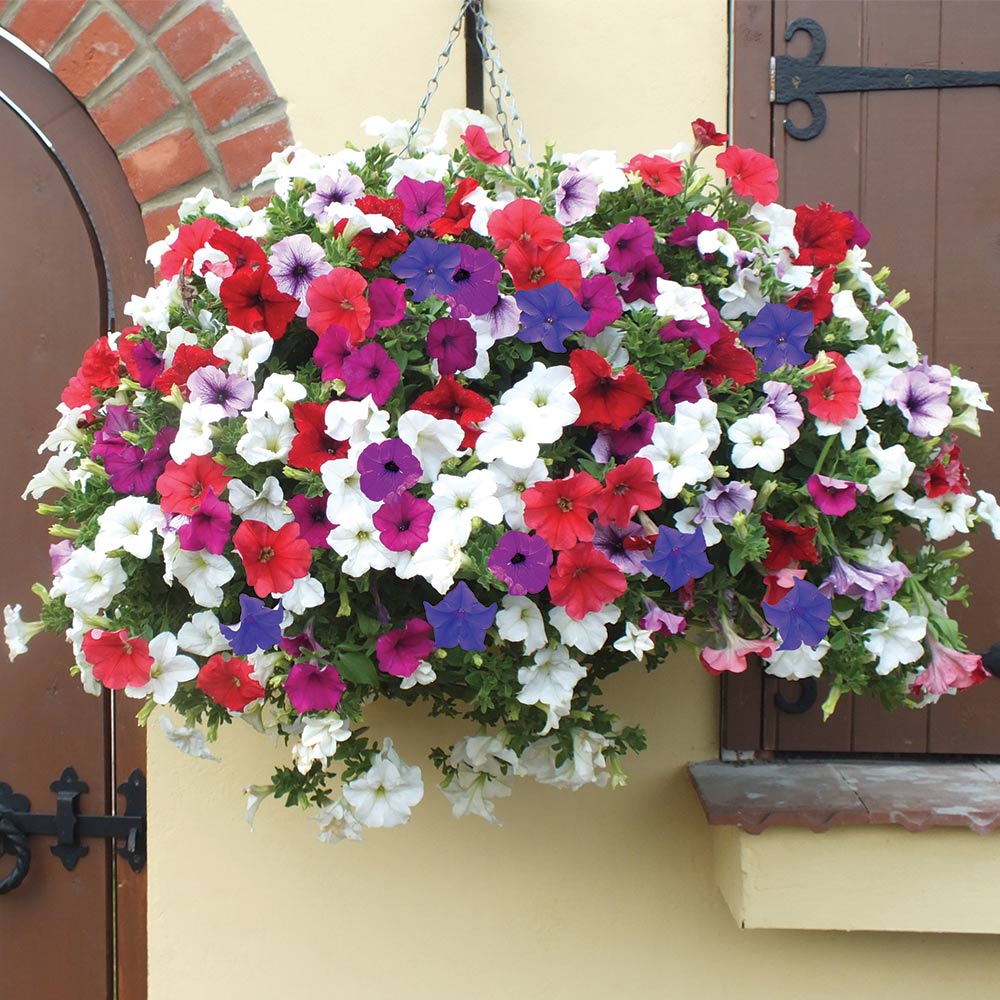
list{
White: 'Snowball', 'Alba'
Pink: 'Pink Wave', 'Sugar Daddy'
Red: 'Red Hot', 'Fire Chief'
Purple: 'Purple Wave', 'Night Sky'
Blue: 'Blue Wave', 'Ultra Blue'
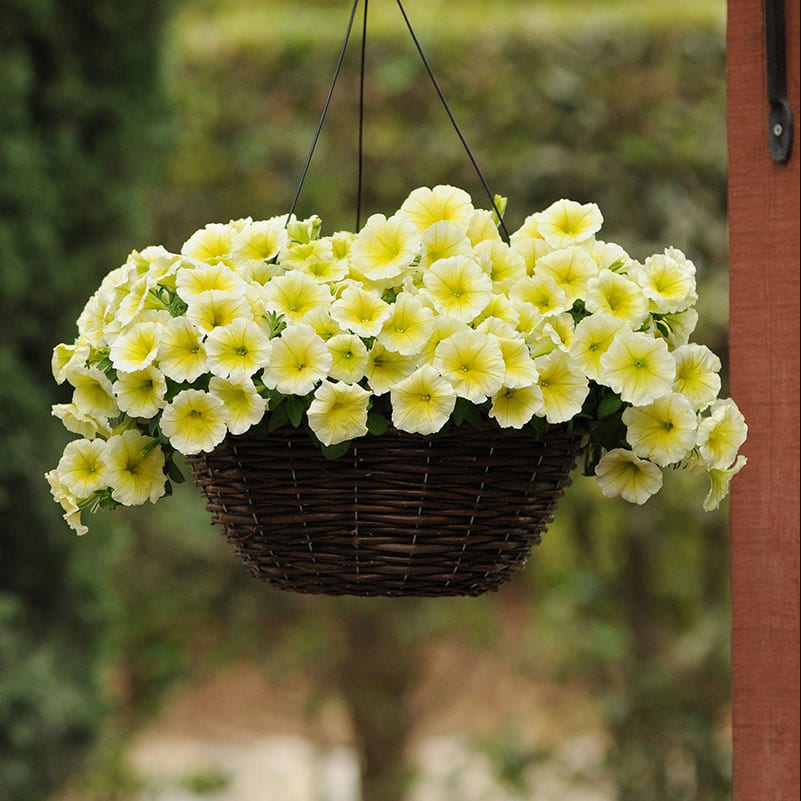
Yellow: 'Sun Spun Yellow', 'Lemonade'
Bicolour: 'Picotee', 'Star', 'Tartan'
Variegated: 'Picotee', 'Star'
}
subtitle{🌟 Disease-resistant varieties}
list{
'Easy Wave' series: Resistant to downy mildew and gray mold
'Supertunia' series: Resistant to diseases and drought
'Carpet' series: Resistant to powdery mildew
'Merlin' series: Resistant to several races of downy mildew
}
subtitle{🌱 Varieties suitable for professional cultivation}
list{
For pot sales: 'Primetime', 'Ultra', 'Storm' (erect habit)
For hanging baskets: 'Wave', 'Supertunia', 'Tidal Wave'
For borders: 'Carpet', 'Merlin', 'Dream'
For early flowering: Fast-flowering varieties (6-8 weeks)
}
title{🔍 Where to buy petunias?}
subtitle{For amateur gardeners and professional growers}
list{
Online nurseries:
Promesse de Fleurs
Truffaut
Jardiland
Specialized growers:
Suntory Flowers (creator of Surfinias)
Danziger
Horticultural cooperatives:
CPMA (France)
VGB (Netherlands)
}
title{Supplier comparison}
list{
Guide to buying petunias — Gerbeaud
}
}
block{
title{🌱🔄 Propagation: Seeds, cuttings, and advanced techniques}
subtitle{All methods for propagating petunias}
subtitle{🌱 Sowing}
list{
Period: January to March for early flowering (under heated shelter).
Substrate: Light mix (peat + perlite).
Temperature: 20-24°C for germination (7-10 days).
Light: Not necessary for germination, but essential after emergence.
Transplanting: When seedlings have 2-3 true leaves.
Time to flowering: 12-16 weeks depending on the variety.
}
Hybrid F1 petunias (first generation) do not produce true-to-type seeds. To obtain seeds, it is necessary to grow non-hybrid varieties or make controlled crosses.
subtitle{🌿 Cuttings}
list{
Period: Summer (July-August) to obtain plants for the following year.
Method: Take semi-hardwood cuttings.
Substrate: Peat/perlite mix or water.
Rooting: 2-3 weeks at 20-22°C.
Advantage: Preserves the characteristics of the parent plant.
}
subtitle{🏭 In vitro culture (for professionals)}
list{
Use: Large-scale multiplication of patented varieties.
Advantages: Speed, absence of diseases, preservation of characteristics.
Cost: Significant investment, reserved for large producers.
}
title{Technical sources}
list{
ISHS — Petunia propagation
}
}
title{🌊 Part 2: Surfinias (Petunia × atkinsiana)}
subtitle{The revolutionary hybrid with unique characteristics}
title{🔬 Biology and origin}
subtitle{A Japanese hybrid with exceptional performance}
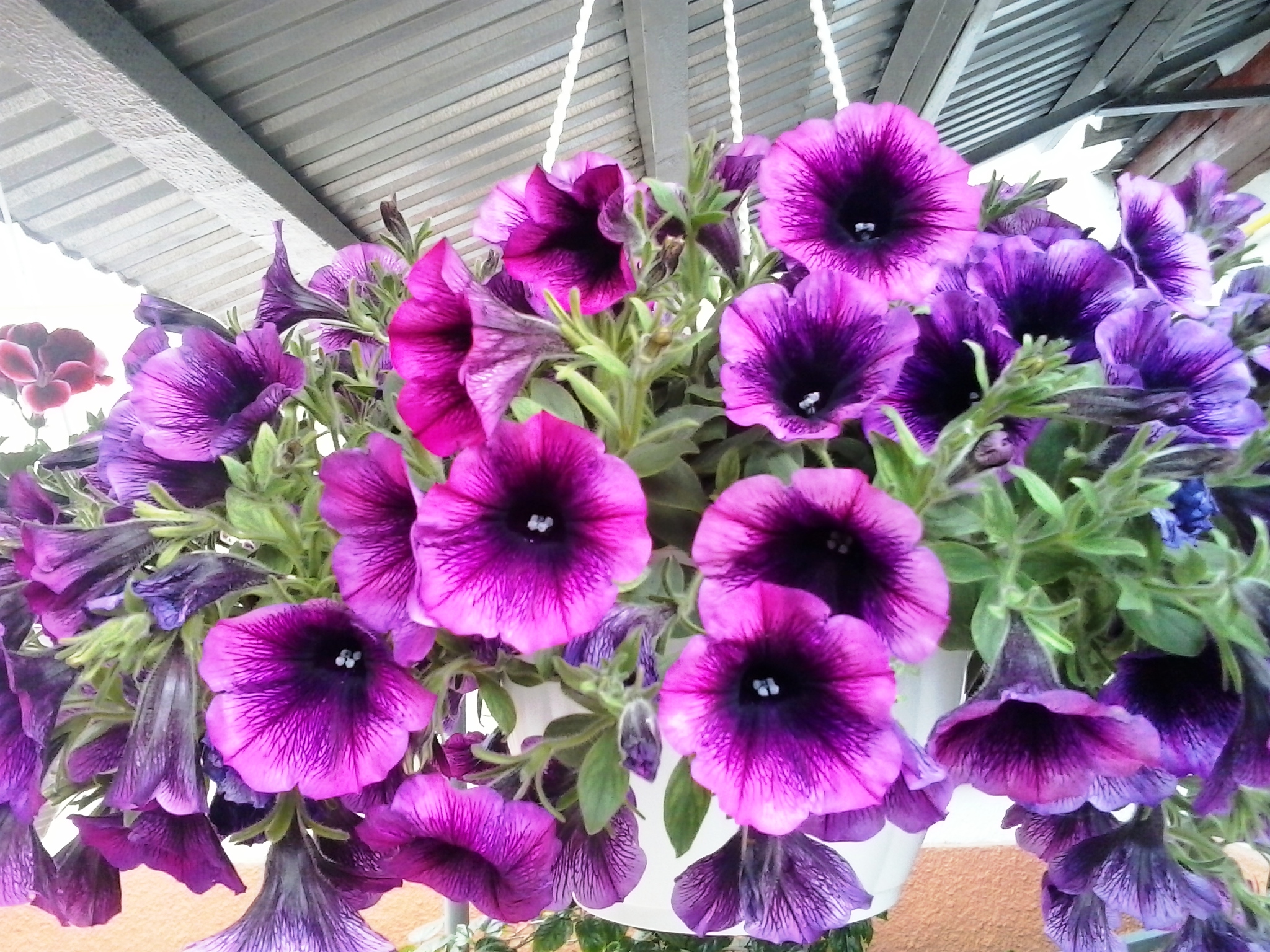
Surfinias are complex hybrids mainly derived from <Petunia axillaris> and <Petunia integrifolia>, developed by the Japanese company <Suntory> in the 1990s. Their commercial name "Surfinia" has become a registered trademark, but is often used as a common name.
- Scientific name: Petunia × atkinsiana (formerly Petunia hybrida 'Surfinia')
- Family: Solanaceae
- Type: Perennial plant in mild climates, annual in temperate climates
- Habit: Trailing, length 60-150 cm depending on variety
- Foliage: Dense, slightly pubescent
- Flowers: Funnel-shaped, 3-5 cm in diameter, various colours (pink, purple, blue, white, red)
- Particularity: Exceptional resistance to rain, wind and diseases
subtitle{🌍 History of the Surfinia}
The development of Surfinias marked a revolution in ornamental horticulture. Before their appearance, trailing petunias were rare and not very resistant.
- 1980s: Start of research by Suntory in Japan to create a weather-resistant petunia.
- 1990: Commercial launch of the first Surfinia (the 'Purple' series).
- 1990s-2000s: Global expansion, development of many colours and varieties.
- 2000s: Introduction of new series (Double Surfinia, Amethystina, etc.).
The name "Surfinia" is a registered trademark of Suntory, but many producers use this term to refer to all trailing petunias that are similar.
title{Historical sources}
title{🌱 Cultivation and care of Surfinias}
subtitle{Robust and easy-to-grow plants}
subtitle{📌 Optimal growing conditions}
- Exposure: Full sun (minimum 6 hours/day). Tolerates partial shade but flowering is reduced.
- Soil: Well-drained, fertile soil, slightly acidic to neutral (pH 6-7). Surfinias are more tolerant of poor soils than classic petunias.
- Watering: Regular but not excessive. Surfinias tolerate drought better than classic petunias.
- Temperature: Ideally between 15°C and 25°C. Sensitive to frost.
- Humidity: Resistant to ambient humidity, but avoid standing water.
subtitle{🌱🔧 Planting}
- Period: After the last frosts, when the soil is warm (mid-May in temperate climates).
- Spacing: 30-40 cm between plants to allow for the trailing habit to develop.
- Depth: Plant at the same level as in the container.
- Support: Provide a support or structure to guide the growth (trellis, hanging basket).
subtitle{💧 Watering and fertilizing}
- Watering:
- - Young plants: daily for the first week.
- - Established plants: 2-3 times per week in summer.
- - Tolerant of drought once well established.
- Fertilizing:
- - Balanced fertilizer or special flower plant fertilizer every 2 weeks.
- - Slow-release fertilizer at planting time.
- - Reduce fertilizing towards the end of the season.
subtitle{✂️ Pruning and maintenance}
- Remove spent flowers: Pinch off faded flowers regularly to stimulate flowering.
- Light pruning: Trim back excessively long stems to maintain an attractive habit.
- Winter protection: In cold climates, Surfinias do not survive the winter. They are typically grown as annuals.
For professional growers: Surfinias are particularly suitable for growing in hanging baskets and containers. Their resistance to the elements makes them ideal plants for outdoor sales.
title{🚜 Professional cultivation of Surfinias}
subtitle{Optimizing for mass production and retail sales}
The professional cultivation of Surfinias relies on techniques similar to those used for petunias, with some specific adaptations related to their trailing habit and resistance.
subtitle{🏭 Greenhouse conditions}
- Temperature: 18-22°C for germination, 20-25°C for growth.
- Relative humidity: 60-70% to avoid fungal diseases.
- Light: 12-16 hours/day. Supplemental lighting necessary in winter.
- Substrate: Light and well-draining mix (peat, perlite, coir).
subtitle{🌱💊 Management of diseases and pests}
Surfinias are generally more resistant than classic petunias, but can still be susceptible to certain problems.
subtitle{🐛 Common pests}
- Aphids: Less common than on classic petunias, but should be monitored.
- Whiteflies: Can be a problem in greenhouses.
- Thrips: Can cause floral deformities.
subtitle{🍄 Fungal and bacterial diseases}
- Mildew: Rare on Surfinias due to their resistance, but possible in humid conditions.
- Powdery mildew: Can appear towards the end of the season.
- Grey rot: Rare due to their airy habit.
subtitle{🌡️💧 Environmental management}
- Irrigation: Drip irrigation is recommended to avoid leaf wetness.
- Drainage: Essential to avoid root rot.
- Fertilization: Follow a precise program with regular foliar analysis.
title{Technical sources}
title{🌈 Varieties of Surfinias: Selection guide}
subtitle{Colours and forms for all tastes}
subtitle{📚 Main series}
- 'Classic Surfinia' series:
- - Single flowers, trailing habit
- - Colours: pink, purple, blue, white, red
- - Examples: 'Surfinia Purple', 'Surfinia Pink'
- - Use: Hanging baskets, containers
- 'Double Surfinia' series:
- - Double flowers, trailing habit
- - Colours: pink, purple, white
- - Examples: 'Double Surfinia Pink', 'Double Surfinia Blue'
- - Use: Hanging baskets, lush arrangements
- 'Amethystina' series:
- - Deep purple flowers, fragrant
- - Very trailing habit
- - Example: 'Surfinia Amethyst'
- - Use: Hanging baskets, shaded balconies
- 'Tidal Wave' series:
- - Very vigorous habit, abundant flowers
- - Colours: pink, purple, white
- - Example: 'Surfinia Tidal Wave Pink'
- - Use: Large suspensions, ground cover
- 'Bella' series:
- - Smaller but very numerous flowers
- - Compact and dense habit
- - Example: 'Surfinia Bella Blue'
- - Use: Small baskets, borders
subtitle{🎨 Classification by colour}

- Pink: 'Surfinia Pink', 'Double Surfinia Pink'
- Purple: 'Surfinia Purple', 'Amethystina'
- Blue: 'Surfinia Blue', 'Bella Blue'
- White: 'Surfinia White', 'Double Surfinia White'
- Red: 'Surfinia Red', 'Tidal Wave Red'
- Yellow: 'Surfinia Yellow'
- Bicolour: 'Surfinia Picotee' (white with pink edges)
subtitle{🌟 Varieties resistant to diseases}
- All Surfinia series: Resistant to rain, wind and fungal diseases
- 'Tidal Wave' series: Resistant to drought
- 'Double Surfinia' series: Resistant to the elements
subtitle{🌱 Varieties suitable for professional cultivation}
- For hanging baskets: 'Classic Surfinia', 'Double Surfinia', 'Bella'
- For large suspensions: 'Tidal Wave'
- For lush arrangements: 'Double Surfinia'
- For shaded balconies: 'Amethystina'
title{🔍 Where to buy Surfinias?}
subtitle{For amateur gardeners and professional growers}
- Online nurseries:
- Promesse de Fleurs
- Truffaut
- Jardiland
- Specialized producers:
- Suntory (official creator)
- Danziger
- Suntory Flowers Europe
- Horticultural cooperatives:
- CPMA (France)
- VGB (Netherlands)
title{Supplier comparison}
title{🌱🔄 Propagation of Surfinias}
subtitle{Techniques adapted to these modern hybrids}
subtitle{🌱 Seeds}
- Period: January to March for early flowering.
- Substrate: Light mix (peat + perlite).
- Temperature: 20-24°C for germination.
- Light: Essential after emergence.
- Transplanting: When seedlings have 2-3 true leaves.
- Time to flowering: 12-16 weeks.
Hybrid F1 Surfinias do not produce true-to-type seeds. To obtain seeds, it is necessary to grow non-hybrid varieties or to make controlled crosses.
subtitle{🌿 Cuttings}
- Period: Summer (July-August).
- Method: Take semi-hardwood cuttings.
- Substrate: Peat/perlite mix or water.
- Rooting: 2-3 weeks at 20-22°C.
- Advantage: Preserves the characteristics of the parent plant.
subtitle{🏭 In vitro culture}
- Use: Mass propagation of patented varieties.
- Advantages: Speed, absence of diseases, preservation of characteristics.
- Cost: Significant investment, reserved for large producers.
title{Technical sources}
⚖️ Comparison: Petunias vs. Surfinias
Which one to choose for what purpose?

📊 Comparison Table
- Criteria | Petunias (Petunia spp.) | Surfinias (Petunia × atkinsiana)
- Habit | Upright to spreading (20-60 cm) | Trailing (60-150 cm)
- Rain Resistance | Moderate (except Wave varieties) | Excellent
- Wind Resistance | Moderate | Excellent
- Disease Resistance | Variable (susceptible) | Excellent
- Flowering | Abundant but may be irregular | Very abundant and continuous
- Available Colours | Very wide range | Wide range (pink, purple, blue, white, red)
- Pot Culture | Yes (small pots) | Ideal (hanging baskets)
- Ground Culture | Yes | Yes (ground cover)
- Price (plants) | €2-5 | €3-8
- Lifespan | Annual (except in mild climates) | Annual (except in mild climates)
- Propagation | Seeds, cuttings | Seeds, cuttings, in vitro
- Best Use | Flower beds, borders, small pots | Hanging baskets, large containers, balconies
💡 When to choose one or the other?
🌿 Choose petunias if...
- You want plants for flower beds or borders.
- You prefer a wide variety of colours and forms.
- You are growing in the ground or in small pots.
- You are on a tight budget (petunias are generally less expensive).
- You want plants that are easy to propagate from seed.
🌊 Choose Surfinias if...
- You want plants for hanging baskets or large containers.
- You are looking for exceptional weather resistance.
- You want very abundant and continuous flowering.
- You need plants that are resistant to diseases.
- You are growing in a humid or windy climate.
Both plants can be combined to create spectacular effects: petunias in flower beds and surfinias in hanging baskets above.
🌱💰 Commercial Aspects and Market
Opportunities for Producers and Gardeners

📈 The Petunia and Surfina Market
A growing sector with many opportunities
Petunias and Surfinias represent a significant market in the global ornamental horticulture industry. Their popularity makes them essential plants for both amateur gardeners and professionals.
🌍 Key Market Figures
- Global sales: Over 500 million plants sold per year.
- Europe: Leading producer of petunias (Netherlands, Italy, France).
- United States: Major consumer, particularly for hanging baskets.
- Japan: Home of Surfinias, a highly developed market.
- Annual growth: 3-5% per year, driven by new resistant varieties.
💼 Commercial Opportunities
- Plant sales: 10-15 cm pots, hanging baskets, seedling trays.
- Seed sales: For amateur gardeners and small producers.
- Rooted cuttings: For producers who want to save time.
- Creation of arrangements: Hanging baskets, floral arrangements.
- Plant rental: For events and parties.
- Online sales: Specialised platforms, marketplaces.
🎯 Target Markets
- Private individuals: Amateur gardeners, balconies, terraces.
- Professionals: Landscape gardeners, florists, local authorities.
- Event industry: Weddings, parties, urban decorations.
- Export: Sales to international markets (Europe, North America).
Market Sources
🌱🔬 Varietal Innovation
New varieties that are revolutionising the market
Varietal innovation is a key driver of the petunia and Surfina market. Breeders are working on several aspects: resistance, colour, growth habit, and climate adaptation.
🎨 New Colours
- Black petunias: 'Black Velvet', 'Black Cherry'
- Bright yellow petunias: 'Sun Spun Yellow', 'Lemonade'
- Orange petunias: 'Orange Wave', 'Tangerine'
- Bicolour petunias: 'Picotee', 'Star', 'Tartan'
- Variegated petunias: Leaves variegated with white or yellow
🌿 New Forms
- Double petunias: Fully double flowers, pompom-like appearance
- Miniature petunias: 2-3 cm flowers, compact growth habit
- Fragrant petunias: 'Sweetunia', 'Fragrant Cloud'
- Petunias with coloured foliage: 'Limelight', 'Golden Star'
🛡️ Improved Resistance
- Downy mildew resistance: 'Merlin', 'Carpet' series
- Drought resistance: 'Wave', 'Supertunia' series
- Slight frost resistance: Varieties for temperate climates
- UV resistance: Colours that do not fade
🌍 Climate Adaptation
- Varieties for hot climates: Resistant to heat and drought
- Varieties for cold climates: Early flowering, slight frost resistance
- Varieties for humid climates: Resistant to fungal diseases
- Varieties for shaded balconies: 'Amethystina', 'Wave Purple'
Innovation Sources
📦 Packaging and Presentation
How to showcase your petunias and Surfinias
Presentation is crucial for the sale of petunias and Surfinias. Good presentation can increase sales by 20-30%.
🛒 Packaging for retail sales
- 10-15 cm pots: Transparent plastic or kraft paper packaging.
- Hanging baskets: Packaging with a hanger for suspension.
- 7-9 cm seedling trays: For young plants.
- 20-30 plant trays: For mass plantings and professionals.
- Planting kits: Pots + substrate + seeds/cuttings.
🎨 Presentation
- Colourful labels: With a photo of the flower and growing tips.
- Decorative bands: Around the pot to attract attention.
- Arrangements: Combinations of different varieties (e.g. Wave petunias + Surfinia).
- Displays: Shelves, hanging displays, sales tables.
📊 Pricing Strategies
- Retail prices:
- - 7-9 cm seedling tray: £1.50-£3
- - 10-15 cm pot: £3-£6
- - Hanging basket: £8-£15
- - 20-30 plant tray: £10-£20
- Wholesale prices:
- - 7-9 cm seedling tray: £0.50-£1.50
- - 10-15 cm pot: £1.50-£3
- - 20-30 plant tray: £5-£10
- Strategies:
- - Promotions on sets (e.g. 3 pots for £10).
- - Bundled sales (e.g. complete planting kit).
- - Seed packet sales (£0.50-£2).
Marketing Sources
🌱🔄 Multifunctional Aspects
Uses, recipes, and other surprising applications

🌿 Ornamental Uses
Beyond flowerbeds and hanging baskets
🏡 Landscaping
- Ground cover: Wave or Tidal Wave varieties for large areas.
- Borders: Multiflora or Merlin varieties for neat borders.
- Flowerbeds: A mix of Grandiflora and Multiflora for a spectacular effect.
- Window boxes: A combination of petunias and surfinias for a dynamic effect.
- Balconies: Petunias in pots, surfinias in hanging baskets.
- Roofs and terraces: Hardy varieties for green roofs.
🎋 Creative Uses
- Floral arrangements: Cut flowers for bouquets (Grandiflora petunias).
- Edible decoration: Edible flowers for salads and desserts (petunias not treated with pesticides).
- Phytoremediation: Ability to absorb certain pollutants (studies in progress).
- Companion plants: Repel certain pests (aphids, whiteflies).
🍽️ Edible Petunias and Surfinias
A flower to discover in the kitchen
Petunia flowers are edible and can be used to decorate dishes. Their taste is slightly peppery, reminiscent of sweet peppers.
- Culinary uses:
- - Decoration for salads, desserts, cocktails.
- - Infusion of dried flowers for herbal teas.
- - Crystallized petals for baking.
- Precautions:
- - Only consume the flowers (the leaves can be toxic).
- - Avoid petunias treated with pesticides.
- - Some people may be allergic.
- Simple recipe:
- - Flower salad: Mix petunia petals with mixed greens, goat cheese, and vinaigrette.
Edible petunias are often heirloom varieties or wild species. Modern hybrids may have a less pronounced flavour.
Sources for edible flowers
🌱🔬 Medicinal and Other Uses
Unexpected properties
💊 Traditional medicinal properties
- Antioxidants: Petunias contain anthocyanins, pigments with antioxidant properties.
- Anti-inflammatory: Traditionally used for skin inflammations.
- Antispasmodic: Some species used for cramps.
- Precautions:
- - Do not use for medicinal purposes without consulting a healthcare professional.
- - Some species may be toxic in large quantities.
🧪 Scientific Uses
- Genetic research: The petunia is a model organism in plant biology (studies on flowering, flower colour).
- Synthetic biology: Used to study the production of pigments and fragrances.
- Phytoremediation: Ability to absorb certain heavy metals (studies in progress).
🎨 Artistic Uses
- Natural dye: Petal can be used to dye fabrics (pink, purple, blue colours).
- Photography: Flowers used as photographic subjects for their beauty and diversity.
- Dried flower arrangements: Dried flowers for lasting compositions.
Sources for uses
🚨 Common Problems and Solutions
Diagnosis and solutions for healthy plants
🐛 Pests: Identification and solutions
🐜 Aphids
- Symptoms: Curled leaves, sticky honeydew, ants.
- Treatment:
- - Manual: Hand removal or water jet.
- - Biological: Insecticidal soap, nettle manure, ladybugs.
- - Chemical: Systemic insecticides (as a last resort).
- Prevention: Companion plants (nasturtiums, marigolds).
🟡 Whiteflies (Bemisia tabaci)
- Symptoms: Small white flies on the underside of leaves, honeydew, sooty mold.
- Treatment:
- - Yellow sticky traps.
- - Natural predators: Macrolophus, Encarsia formosa.
- - Insecticides: Insecticidal soap, neem oil.
- Prevention: Greenhouse ventilation, avoid excess nitrogen.
🐛 Caterpillars
- Symptoms: Holes in leaves, presence of droppings.
- Treatment:
- - Manual: Hand picking.
- - Biological: Bacillus thuringiensis (Bt).
- - Chemical: Specific insecticides (as a last resort).
- Prevention: Crop rotation, trap plants.
🔴 Thrips
- Symptoms: Deformed leaves, silvery streaks, damaged flowers.
- Treatment:
- - Blue traps.
- - Natural predators: Amblyseius, Neoseiulus.
- - Insecticides: Spinosad, neem oil.
- Prevention: Weed removal, ventilation.
Sources for pests
🍄 Diseases: Identification and solutions
🟣 Downy mildew (Peronospora)
- Symptoms: Yellow spots on the upper side of leaves, grey-purple fuzz underneath.
- Treatment:
- - Remove affected leaves.
- - Fungicides: Copper-based products, systemic products.
- - Prevention: Avoid moisture on leaves, ventilation.
- Prevention: Crop rotation, disinfection of equipment.
⚪ Powdery mildew
- Symptoms: White powdery coating on leaves and stems.
- Treatment:
- - Fungicides: Sulfur, baking soda.
- - Biological: Antagonist bacteria (Pseudomonas).
- - Prevention: Avoid nocturnal humidity, ventilation.
- Prevention: Avoid excess nitrogen, crop rotation.
🟤 Grey mold (Botrytis)
- Symptoms: Brown spots, grey fuzz, wilting.
- Treatment:
- - Remove affected parts.
- - Fungicides: Products based on Botrytis cinerea.
- - Prevention: Avoid excess humidity, ventilation.
- Prevention: Avoid standing water, disinfection.
🟥 Bacterial spots
- Symptoms: Brown or black spots on leaves, yellow borders.
- Treatment:
- - Remove affected leaves.
- - Antibacterials: Copper-based products.
- Prevention: Crop rotation, disinfection of equipment.
🟨 Chlorosis (deficiency)
- Symptoms: Yellow leaves with green veins, stunted growth.
- Causes: Deficiency in iron, magnesium, nitrogen.
- Treatment:
- - Appropriate fertilizer (chelated iron for iron deficiency).
- - Correct soil pH.
- Prevention: Soil analysis, balanced fertilization.
Sources for diseases
🌡️ Environmental Problems
🔥 Sunburn
- Symptoms: Yellow or white leaves, dry edges.
- Causes: Excessive sun exposure, especially on young plants.
- Solution:
- - Temporary shade with shade cloth.
- - Regular watering to reduce water stress.
- Prevention: Gradual acclimatization of plants.
💧 Overwatering
- Symptoms: Yellow leaves, wilting, root rot.
- Causes: Poorly drained soil, excessive watering.
- Solution:
- - Reduce watering.
- - Improve drainage (sand, perlite).
- - Remove affected parts.
- Prevention: Use pots with drainage holes.
❄️ Frost and cold
- Symptoms: Black leaves, wilting, stopped growth.
- Causes: Temperatures below 5°C (41°F).
- Solution:
- - Bring pots indoors.
- - Protect outdoor plants with horticultural fleece.
- Prevention: Plant after the last frost.
🌱 Lack of flowering
- Symptoms: Few or no flowers, excessive foliage.
- Causes: Excess nitrogen, lack of light, lack of pruning.
- Solution:
- - Reduce nitrogen fertilizers.
- - Increase sunlight exposure.
- - Pinch stems to promote branching.
- Prevention: Balanced fertilization program.
Sources for problems
🌱📚 Useful Resources
For further information

📖 Recommended Books
- Titre : Petunias and Surfinias: The Complete Guide
- Auteur : Daniel Platteau
- Description : Practical guide to the cultivation, care, and selection of petunias and surfinias.
- Disponible : Amazon (search by title)
- Titre : The Petunia Book
- Auteur : Royal Horticultural Society
- Description : Reference guide to petunias, their history, and cultivation.
- Disponible : RHS Shop
- Titre : Flowering Plants for the Garden
- Auteur : Christopher Lloyd
- Description : General book with a chapter dedicated to petunias.
- Disponible : Amazon
- Titre : The Art of Growing Petunias
- Auteur : Jean-Pierre Renard
- Description : Practical guide for amateur and professional gardeners.
- Disponible : Fnac
🌍 Websites and Forums
🎓 Courses and Webinars
- Formation : Professional cultivation of petunias — ISHS
- Description : Webinar on professional cultivation techniques.
- Lien : ISHS
- Formation : Variety selection of petunias — Danziger
- Description : Training on new varieties and their adaptation.
- Lien : Danziger
- Formation : Disease management in petunia cultivation — GPN Magazine
- Description : Webinar on the prevention and treatment of diseases.
- Lien : GPN Magazine
- Formation : Sales and marketing of flowering plants — CPMA
- Description : Training on the marketing of petunias and surfinias.
- Lien : CPMA